 日本語
日本語 





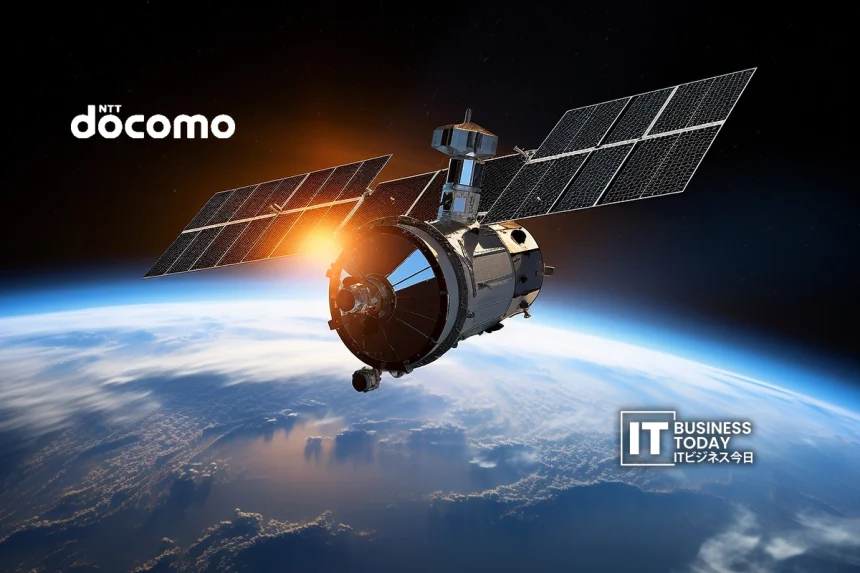
NTT Docomo, a major mobile operator in Japan, is setting the stage to offer a satellite direct, to, device (D2D) communication service that will allow regular smartphones to be connected directly to a satellite without going through a ground base station anytime from early fiscal 2026. This will be one of the biggest expansions of connectivity options to the people of Japan and, at the same time, a major sign of the change in operations of mobile networks in the next decade.
The first users of the service, which comes out of a collaboration with SpaceX’s Starlink low, earth, orbit (LEO) satellite constellation, will be able to send and receive text messages and data communications using certain apps even if there is no ordinary cellular network coverage. that’s for example, if they are on a remote island, in a mountain area or literally at sea. Docomo’s objective is to provide network access that is dependable everywhere “anytime, anywhere” including situations such as natural disasters when the ground infrastructure may be damaged or inaccessible.
Bridging Coverage Gaps with Satellite Technology
Docomo’s satellite D2D service does not require the use of ground base stations, which have traditionally been the mobile communication backbone, as it can connect compatible 4G/LTE smartphones directly with overhead satellites. This way, it is possible to communicate via messages and use data in locations where radio signals from terrestrial towers cannot reach.

Also Read: FastNeura and SpaceData Link Cognition with Space Data
In Japan, regular terrestrial networks already cover more than 99% of the population, but there are still some geographic challenges. Isolated mountain valleys, islands with very few inhabitants, and disaster, affected areas have always been the places where signals have been either very weak or non, existent. Satellite D2D can provide the solution to this problem and also works as a network backup in the case of disaster, thus increasing the country’s communication resilience.
Besides that, users will not have to utilize any special external hardware as the service will run on LTE, compatible smartphones with supporting software or apps, thus making it easier for a large number of people to use it. Both individual and business customers will be able to use the service, with corporate plans handled through Docomo’s enterprise division.
Competitive Landscape: Japan’s D2D Race
Docomo’s entry comes in a fast-moving market. Its domestic rival KDDI launched its own Starlink-based D2D service, au Starlink, in April 2025 — almost a year ahead — setting an early standard for satellite messaging in Japan. SoftBank is also preparing a similar offering this year, and Rakuten Mobile plans to launch its version later in 2026 using satellites from AST SpaceMobile.
This means Japanese mobile operators are now broadly chasing the same goal: extending connectivity where terrestrial networks can’t reach, and doing so without requiring specialized satellite phones or terminals. This trend mirrors global developments in non-terrestrial networks (NTN) that aim to seamlessly weave satellite links into everyday cellular experience. Standards bodies like the 3GPP have included NTN support in recent releases, enabling such services to run on standard LTE and 5G devices.
What This Means for Consumers and Businesses
ne of the most noticeable changes for consumers will be the transformation of mobile connectivity through service availability in some of the most coverage, poor areas. Such areas include hiking trails, offshore waters, and rural regions. When the traditional networks are not working, users get a lifeline for messaging and basic data. It is of great emergency response potential: communication is usually a vital lifeline right after an earthquake, a typhoon, or any other disaster when the ground networks may be damaged or overloaded.
It is true that satellite D2D opens up the possibilities for a portable communications revolution, but as things stand now, it is not all so straightforward.
Satellite D2D is commonly considered a raised, extension of LTE/5G outdoor coverage. In contrast to industrial private networks, the cellular ground core is an absolute necessity, not an option. Even more fundamentally, the ones who place and use ground cellular coverage want to be the ones who control the D2D communication.
One reason behind this scenario is that different network operators deploy different chipsets leading to a fragmented device ecosystem. Another reason is that 3GPP specifications are at their beginning stage and loT satellite technology and IoT ground technology will take time to come together and truly integrate. Complexity is increased further by the need for 3GPP Release 17 support for D2D enterprise mesh where different physical layers will be based on different entities such as glao and 5G, NR.
Operators themselves also benefit. By integrating satellite connectivity into their service portfolios, carriers like Docomo can improve customer retention, reduce churn, and unlock new revenue streams through premium coverage and enterprise IoT services that require ubiquitous connectivity.
5G and Beyond: Integrating Satellite Networks
The arrival of satellite D2D does not replace 5G networks but complements them. As terrestrial 5G reaches ever broader coverage, satellite systems provide coverage beyond its physical limits. They act as a safety net and extension for mobile operators, enabling service in areas where building ground infrastructure would be impractical or uneconomic.
By moving toward hybrid network architectures, telcos and technology providers are positioning themselves for the next evolution of mobile Internet — one where terrestrial and space networks act as one unified system. This fusion also opens doors for future services such as IoT monitoring, remote asset tracking, and connected mobility applications that demand connectivity anywhere it’s needed.
What’s Next
Docomo will clarify pricing, supported devices, coverage details, and compatible applications as the launch nears. The operator’s space division, NTT C89, is leading the satellite initiative, placing the company at the forefront of Japan’s emerging telecommunication constellation ecosystem.
As the satellite D2D market matures, Japanese consumers and businesses can expect faster innovation cycles — with enhanced data services and broader global roaming capabilities on the horizon. Japan’s multi-operator engagement in satellite connectivity also aligns with global trends toward resilient, ubiquitous communications networks that blend terrestrial, airborne, and space-based elements.



 English