 日本語
日本語 





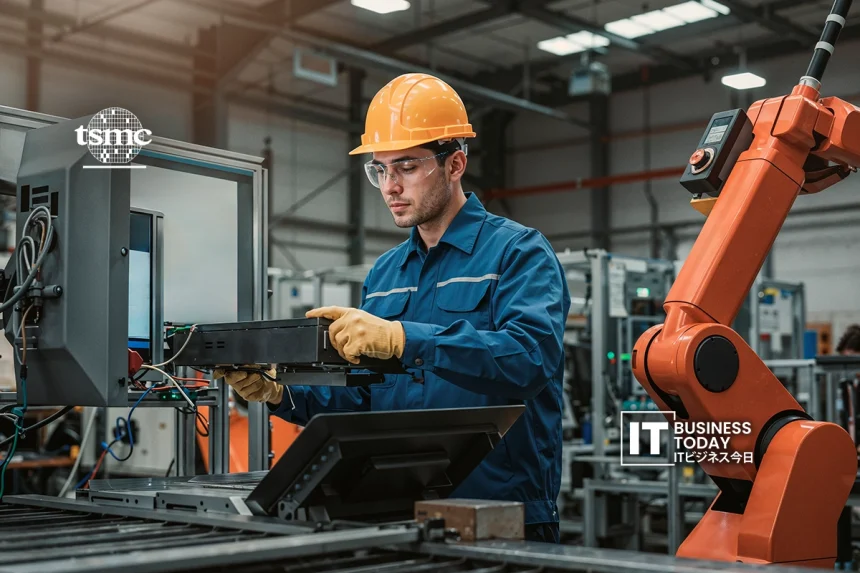
Taiwan Semiconductor Manufacturing Company (TSMC), the world’s biggest contract chipmaker, has announced its plan to manufacture cutting edge 3 nanometer semiconductors in Japan, which marks a very important move in the country’s technology and manufacturing sectors. This was revealed after TSMC CEO C. C. Wei met with Japanese Prime Minister Kan Taro in Tokyo. The two confirmed that Japan might soon have the most advanced semiconductor production in the world.
Once realized, it will be the first time that 3, nanometer chips are fabricated in Japan, which will literally put Japan back in the semiconductor industry globally, along the top, as it is thought, it was the leader of this industry decades ago.
Why 3-Nanometer Chips Matter
The 3, nanometer process is the most sophisticated semiconductor manufacturing technology that is currently being mass, produced. Chips made by this technology provide substantial enhancements in performance, power efficiency, and transistor density which are necessary for AI workloads, high, end smartphones, autonomous vehicles, and advanced data centers.

Also Read: SoftBank and FANUC Rally Partners to Compete in the New AI‑Driven Robotics Era
Wei mentioned that this technology has already become the backbone of the AI and smartphone ecosystems of today. With the 3, nanometer production coming to Japan, TSMC’s intention is not only to expand its manufacturing network but also to contribute towards Japan building the basis of its AI economy in the future.
This step is in keeping with the global trend: governments and businesses are vying to ensure their access to advanced chips as artificial intelligence, automation, and connected technologies revolutionize industries.
Strengthening Japan’s Semiconductor Revival
For over 30 years, Taiwan, South Korea, and the United States have been leading the semiconductor industry, while Japan has been trying to recover its semiconductor industry to be on the same level with those countries. The government’s support of TSMC reflects a precise plan to bring back local chip production faculties, diminish the risks of supply chain dependency, and enhance the overall economic security. According to Prime Minister Takaichi, AI and semiconductors are the principal fields of national development, and she guaranteed that the government together with the industry would constantly collaborate on programs that will not only procure Japan to be more crisis, resistant but also boost its economic competitiveness for a long time. Government support in this regard is likely to include the provision of financial incentives, the upgrading of infrastructure, and the training of the workforce.
Expansion of TSMC in Japan is an inevitable move that follows the company’s existing presence there. TSMC’s first Japanese factory in Kumamoto Prefecture, which became fully operational in 2024, manufactures 12 to 28 nanometer chips that are mostly used in the automotive and industrial sectors. A second plant is being constructed at the same site, indicating TSMC’s commitment over a long period of time to this region.
Impact on Japan’s Tech Industry
The launch of 3nm production would totally transform Japans tech ecosystem. Advanced chip manufacturing pulls in a tightly, knit network of suppliers, materials manufacturers, equipment vendors, and research institutions, many of which have already established a significant presence in Japan.
This development could accelerate innovation across multiple sectors:
Artificial Intelligence: Having domestic access to state, of, the, art chips reduces the stones on the path for various Japanese AI startups and businesses which are developing large, scale models, robotics, and edge AI systems.
Automotive Technology: Japans automobile sector is likely to gain a great deal, especially since in future vehicles will be software, defined platforms that will need powerful, energy, efficient chips to enable autonomous driving and advanced driver, assistance systems.
Industrial Automation: The use of High, performance semiconductors will be instrumental in the development of smart factories, robotics, and precision manufacturing, fields in which Japan is already a world leader.
Besides, by being the base for such advanced fabs, the country can also keep more semiconductor value at home, rather than totally depending on foreign production.
Broader Business and Economic Implications
The move by TSMC has given an extra boost to Japan’s attractiveness as a hub for high, tech manufacturing to global companies that are running their operations in Japan. Multinational companies that are looking for reliable supply chains may start to consider Japan as a safer option in the face of geopolitical tensions that are impacting semiconductor production in other parts of the world.
The local community is set to gain from this as well. Semiconductor fabs not only directly open up high, skilled job opportunities for engineers and technicians but also generate jobs for logistics and the construction workers indirectly. It is a well, known fact that regions with a dense concentration of advanced fabs will attract more and more venture capital, research funds, and foreign direct investments in the long run.
Moreover, from a strategic perspective, this decision will also contribute to the diversification of global chip manufacturing, thus lowering the risk associated with the overconcentration of this production and making the supply more reliable for the industries that use advanced semiconductors as a crucial input.
Looking Ahead
Although Japan has not given any figures regarding the duration and production capacity, the very announcement is a strong indication of the country’s semiconductor revival. In case the Japanese government backs TSMCs 3, nanometer production as pledged, it might fundamentally change the future of Japan in the worldwide chip supply chain.
Moreover, with the booming trend of AI, powered computing, self, driving vehicles, and other data, hungry applications, the Japan, TSMC alliance could turn out to be the biggest technology bet of the decade at least for the entire world tech industry besides Japan.



 English