 日本語
日本語 





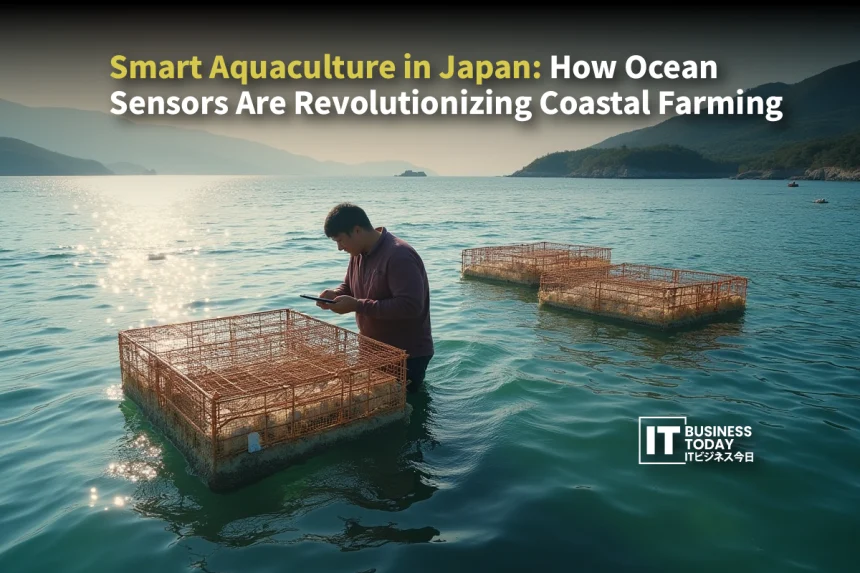
Seafood in Japan is everywhere. Not just on plates. Not just in restaurants. Not just in sushi shops. It is in family meals. It is in markets. Life is part of a million lives and millions of people daily. The people who are actually making this possible are disappearing. Fishermen are aging. Fish stocks are changing. Weather is unpredictable. Imports keep rising. In 2024, Japan bought seafood worth around JP¥2 trillion. That is more than the value of everything caught or farmed in the country. The industry is at a breaking point.
Smart Aquaculture or Smart Suisan tries to fix this. It mixes old fish farming with new tools. Sensors sit in cages and water. They measure oxygen, temperature, and other conditions. Buoys float and collect data. AI watches the patterns and tells farmers when to feed or harvest. Farmers can check everything on their phones without being on the boat.
These sensors are not just gadgets. They are a lifeline for Japan’s coastal economy. Decisions stop being guesses. They are based on real numbers and real trends. The total domestic supply during FY2023 for fish and seafood was around 6.52 mt. That means a lot of food, but such a large quantity does make the beneficiaries more deserving of credit. The future of Japan’s seafood depends on farmers seeing the ocean clearly and acting on what they see.

Why Japan Needs Smart Farming
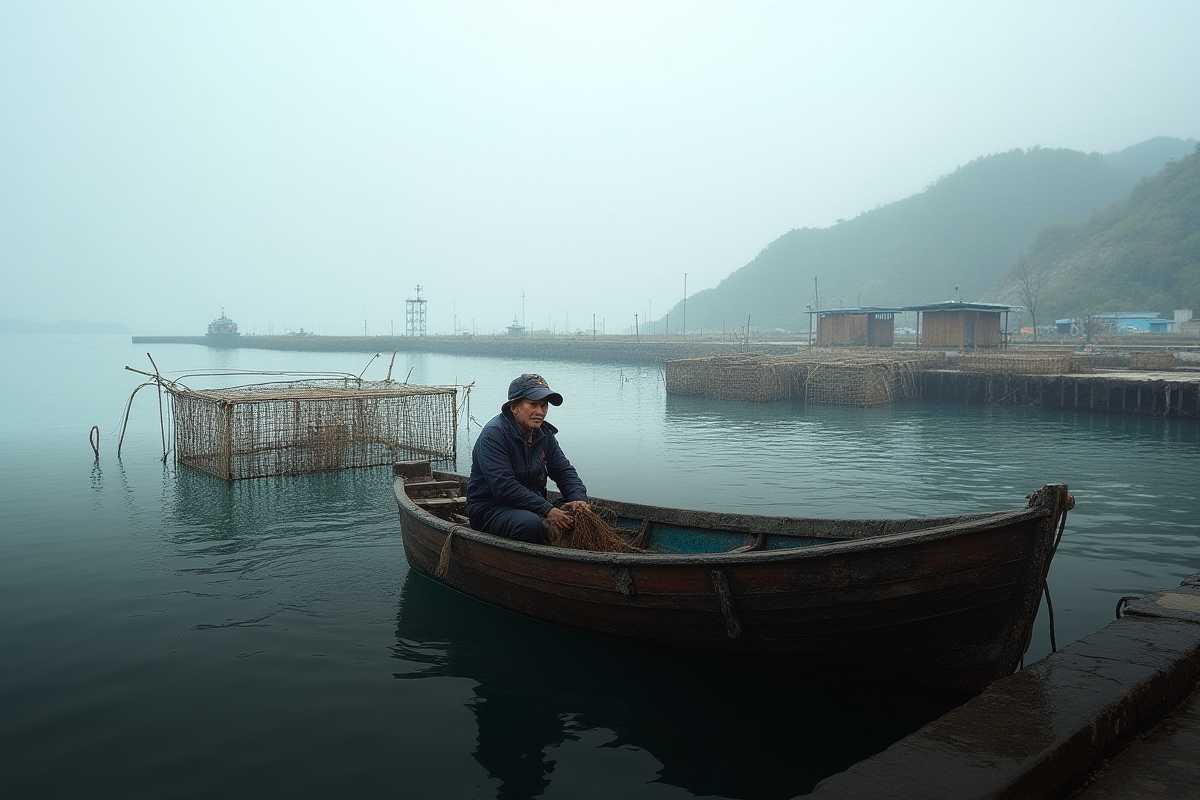
Japan’s coastal farming problem is not coming. It is already here. First, the people are disappearing. The average fisherman is well over 60, and in many villages there is no one waiting to take over. Children move to cities, boats stay tied to docks, and skills that once passed quietly from hand to hand now stop cold. As a result, even productive coastal areas struggle to stay alive.
At the same time, the ocean itself has stopped behaving. For decades, fishermen relied on memory. When to feed. When to harvest. When to stay away. Nevertheless, global warming has rendered the said playbook as not dependable. Over the past 100 years, the average sea surface temperatures in the vicinity of Japan have increased by 1.33°C. That alteration may seem minor, but it is sufficient to give fish a hard time, modify their reproductive cycles, and moreover, it can initiate wild blooming of algae overnight which could kill the fish due to lack of oxygen. Therefore, experience alone no longer protects livelihoods.
Then comes the daily grind. Traditional aquaculture still depends on visual checks and manual feeding. This means long hours, guesswork, and wasted feed sinking to the seabed. Consequently, costs rise while margins shrink.
The pressure shows up clearly in trade numbers. Japan’s seafood imports for the year 2024 amounted to approximately JP¥2 trillion, whereas the domestic supply and wild catch were around JP¥1.6 trillion. To put it differently, the nation now purchases more seafood than it generates.
So the crisis is not just environmental or demographic. It is structural. Without smarter systems, Japan’s coastal farming simply cannot keep up.
Also Read: Inside Japan’s Adtech Transformation: How Adaptive Streaming Is Solving the Performance vs. Experience Paradox
How the Technology Works
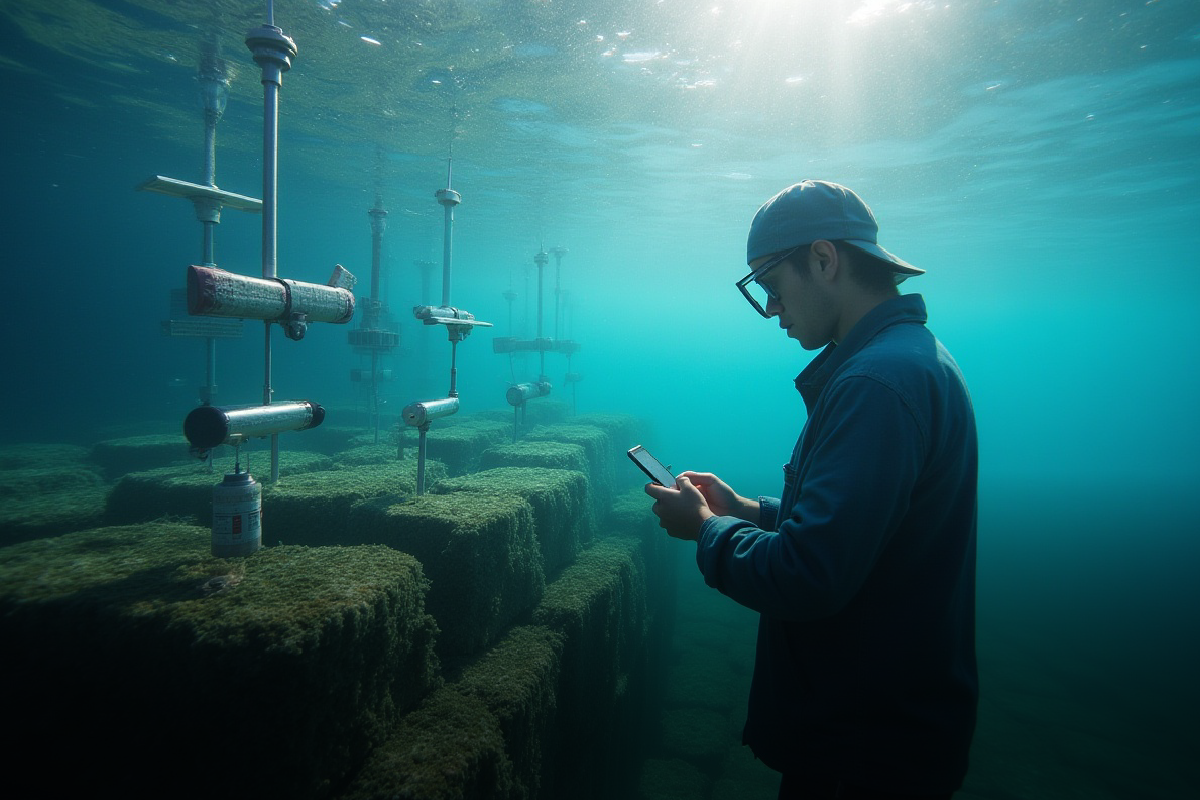
On the surface, smart aquaculture does not look dramatic. There is no big machinery. No loud automation lines. Just equipment sitting quietly in the water. But that calm look hides a very deliberate system doing constant work in the background.
It begins underwater. Sensors are placed inside cages, ropes, or farming zones where fish and shellfish actually live. These sensors track dissolved oxygen, salinity, temperature, and chlorophyll. Each one answers a basic survival question. Is there enough oxygen to breathe. Is the water too salty or too fresh? Is the temperature pushing fish into stress? Is plankton building up in a way that could turn dangerous. Earlier, farmers read these signals with their eyes and experience. Now the water speaks for itself.
Above the surface, buoys take over. They float in the bay, often unnoticed. Solar panels keep them running all day. The buoy gathers information into the sensors beneath it and transfer it via the mobile network. In this way, farmers need not visit every cage regularly just to do checks. Instead, they get updates without leaving shore. Time, fuel, and physical effort drop immediately.
After that, the data moves into the cloud. This is where AI comes in, quietly and continuously. The system does not just store numbers. It watches patterns. It learns what is normal for that specific location. When something starts to drift, a slow oxygen drops or an unusual temperature swing, the system flags it early. Those alerts go straight to the farmer’s smartphone. Not as technical charts, but as simple signals that say act now or stay calm.
Then there is the digital twin. This part often sounds abstract, but it is practical. A digital twin is a virtual copy of the real farming site. Same water conditions. Same stock density. Same feeding plans. Farmers can test decisions there first. Feed less today. Delay harvest. Change timing. They see possible outcomes before touching the real stock.
So the technology does not replace human judgment. It supports it. The farmer still decides. The difference is this. Decisions are no longer made in the dark. The ocean stays unpredictable, but it is no longer invisible.
Innovation in Action
The real proof of smart aquaculture shows up when theory meets daily farm work. Two examples from Japan’s coast make this clear.
Case A. Red Sea Bream farming in Ehime and Kumamoto
Red sea bream, or madai, is a high value fish. Feeding it wrong costs money fast. For years, farmers followed fixed schedules. Feed went in whether fish were hungry or not. Sometimes it worked. Often, it did not.
Smart systems changed that rhythm. Sensors and cameras now watch fish behavior inside the cages. When fish swim actively toward the surface or create specific vibration patterns, the system reads it as appetite. When movement slows, feeding pauses. As a result, feed drops only when fish actually want it.
This shift matters. First, farmers waste less feed. Second, water quality stays cleaner because excess pellets do not rot on the seabed. Third, fish grow more evenly, which improves market quality. Most importantly, farmers stop guessing. Feeding becomes a response, not a routine. Over time, this also reduces labor. One person can manage more cages without standing on a boat all day.
Case B. Oyster farming in Hiroshima and Miyagi
Oysters carry a different kind of risk. The danger is not slow growth. It is sudden loss. Changes in salinity or plankton levels can trigger mass death or raise food safety concerns like norovirus contamination.
Here, sensors act as early warning tools. Salinity sensors show when freshwater runoff rises after heavy rain. Plankton and chlorophyll data reveal when bloom conditions start forming. Because of this, farmers can adjust harvesting schedules instead of reacting after damage is done.
In some cases, oysters are harvested earlier to avoid contamination. In others, farmers delay harvesting until conditions stabilize. This kind of timing used to rely on instinct. Now it relies on signals that arrive in real time.
Behind many of these deployments are companies like Umitron and KDDI. They work with local cooperatives, not over them. The technology fits into existing practices instead of replacing them.
These case studies show one thing clearly. Smart aquaculture does not promise perfect oceans. It offers something more realistic. Fewer surprises. Better timing. And decisions backed by evidence instead of hope.
The ‘Blue Economy’ Impact
Smart aquaculture does more than fix farm level problems. It quietly reshapes how coastal economies survive and grow.
Start with sustainability. When feeding becomes precise, waste drops. Fish eat what they need, when they need it. Uneaten feed no longer sinks and rots on the seabed. Because of this, oxygen levels stay healthier and surrounding waters recover faster. Over time, farms stop acting like pollution points and start behaving like managed ecosystems. This matters in narrow bays where damage spreads quickly.
Next comes trust. Data does not stay locked inside the farm. It travels with the product. Water temperature, oxygen levels, and harvest timing get logged automatically. At the market, this information can appear as a simple QR code. A consumer scans it and sees where the fish came from and under what conditions it was raised. As a result, seafood stops being anonymous. Trust improves. Prices follow. For exporters, this traceability also reduces friction with regulators and buyers who demand proof, not promises.
Then there is the human side. Coastal jobs have long carried a reputation. Hard labor. Long hours. Physical risk. Smart systems change that image. Monitoring happens on screens. Decisions rely on data. Skills shift toward analysis and system management. Because of this, younger workers who once ignored fisheries start paying attention again. The work feels modern and future facing.
This transition is in line with worldwide patterns as well. The World Bank and WWF mentioned that by the year 2050, aquaculture might be responsible for up to 22 million job opportunities globally. Japan’s smart coastal farms plug directly into that future. Not by chasing scale blindly, but by making each bay smarter, cleaner, and more resilient.
Challenges and Future Outlook
Smart aquaculture is not a magic switch. The first barrier is cost. Sensors, buoys, software, and maintenance all demand upfront investment. For small, family run farms, this can feel out of reach. Even when the long term gains are clear, the short term financial pressure slows adoption.
Connectivity is another weak point. Many farms sit far from strong mobile coverage. Offshore areas still struggle with stable 5G or even LTE signals. When data cannot travel reliably, the system loses value. Farmers then fall back on old habits, not by choice but by necessity.
Still, the direction is clear. The next phase pushes automation further. Autonomous underwater drones will inspect cages, check stock health, and monitor damage without human entry. Harvest systems will become more automated, reducing physical risk and labor strain. Over time, these tools will shrink the gap between large operators and small cooperatives.
The future of coastal farming in Japan will not be fully hands off. However, the future will be characterized by being lighter, safer and more predictable at all levels. The present challenge is to bring that future closer to us before the extinction of present-day farms.
Conclusion
Smart aquaculture is not about replacing tradition. It is about keeping it alive. Japan’s connection with the ocean was developed through patience, observation, and respect for the natural cycles. The values of those days still exist in modern times, but their survival needs better tools. The humans are not replaced; rather, they are aided in their awareness through the use of sensors, data, and smart systems.
By making ocean conditions visible and measurable, Japan is turning the sea into a transparent asset. Farmers see problems earlier. Consumers gain trust in what they eat. And coastal communities find a path forward despite fewer hands on deck.
The workforce may shrink. The ocean may change. Still, the sushi on the plate can remain honest, sustainable, and high quality if the sea itself is finally understood, not guessed.



 English