 日本語
日本語 


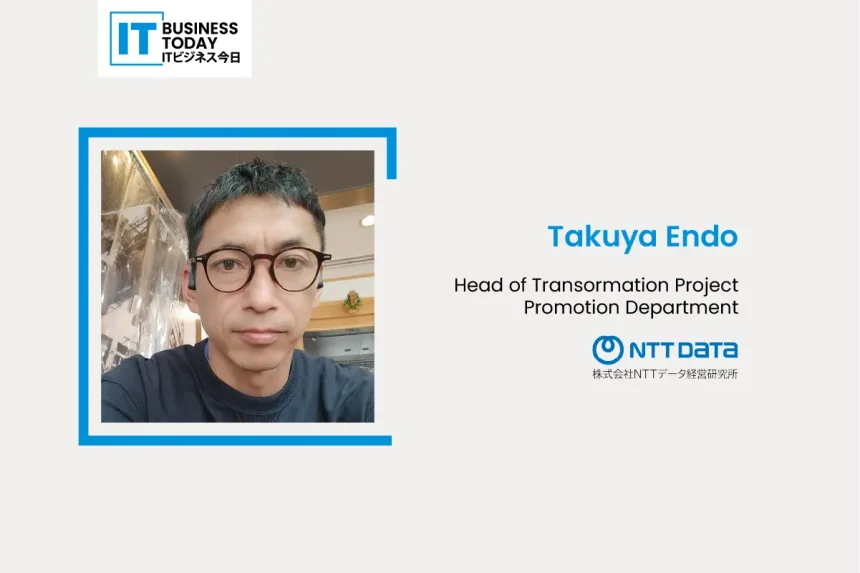
Mr. Takuya, can you tell us about your professional background and your current role at NTTDATA Institute of Management Consulting, Inc.?
遠藤様、ご自身のご経歴と現在のNTTデータ経営研究所での役割についてお聞かせください。
➡(JP)1998年、NTTデータに入社し、アカウント営業およびソリューション営業として、クライアントの経営課題を解決するためのシステム企画・提案でキャリアをスタート。提案時は必ず現場に赴き、現実を踏まえたあるべき姿を提案する。
約8年の営業経験から転じてNTTデータのグループ会社でHRDコンサルタントとなり、NTTデータグループ内外の人材育成体系の整備に参画。
NTTデータ本社へ出向復帰し、人事・人材開発スタッフとしてグローバル人材育成施策の体系と個々の施策の企画導入等をリード。アジア各国の現地グループ企業や大学等の教育機関と連携したプログラムやタレントマネジメントを展開。
2016年、水上印刷株式会社(現在の、MIC株式会社)へ転職し、IT部門長として部門の立ち上げに参画。基幹システム、人事システム、社内ネットワーク等、全社の基盤を整備後、ITを活用した顧客向けのビジネスプロセスの提案や新規事業立ち上げを担当し、DXの先駆けをリード。HRの領域にキャリアチェンジしたはずなのに、ここでもう一度ITの領域に戻りました。しかし、会社の中でのポジションを上げることで、より経営的な視点で活動することができ、自分の中ではキャリアのステップアップにつながったと実感しています。
2019年、日本タタ・コンサルタンシー・サービシズ株式会社にマネージャーとして入社し、翌年人財開発部長(=Head of Talent Development)に昇格。人材育成施策を統括してインド本社のプログラムを日本に導入するとともに、新入社員の研修と配属を立て直し退職率改善等に貢献。PM人材育成や部門別専門性の向上をデータドリブンでアプローチ。
2023年、NTTデータ経営研究所に入社。人材育成、ブランディング、戦略的リソース拡充、AI活用の推進など、社の成長施策を経営陣の直下で推進。
➡(EN)
When I joined NTT DATA in 1998, I started my career in account and solution sales, planning and proposing systems to help clients solve their management challenges. I always made a point of visiting client sites so that my proposals reflected the on-the-ground reality and a realistic, yet ideal future state.
After about eight years in sales, I moved to an HRD consultant role at an NTT DATA Group company, where I helped design talent development frameworks both within and outside the Group. I then returned to NTT DATA headquarters as part of the HR and Talent Development team, leading the design and rollout of global talent development programs in collaboration with group companies and universities across Asia.
In 2016, I joined Mizukami Printing Co., Ltd. (now MIC Corporation) as Head of IT and helped launch the IT function. I built core infrastructure such as the ERP, HR systems, and internal networks, and then led IT-driven business process proposals and new business development for clients, acting as an early driver of digital transformation.
Although I had shifted my career into HR, this role brought me back into the IT domain. Taking on a more senior position allowed me to work from a management perspective, which I felt was a clear step forward in my career.
In 2019, I joined Tata Consultancy Services Japan as a manager and was promoted the following year to Head of Talent Development. I oversaw talent development initiatives, localizing programs from TCS headquarters in India for Japan and overhauling new graduate training and placement, which contributed to better retention. I also drove data-driven initiatives to develop project managers and deepen specialized skills in each department.
In 2023, I moved to NTT DATA Institute of Management Consulting, where I work directly under the executive team to drive company-wide growth initiatives, including talent development, branding, strategic resourcing, and the use of AI.
You began your career at NTT DATA walking into client sites yourself, grounding every proposal in on-site reality. Two decades later, you’re driving transformation strategy at a national scale. Looking back, what personal principles from those early days still anchor your leadership today?
遠藤様はNTTデータでキャリアをスタートされ、実際にクライアントの現場に足を運び、全ての提案を現場の実態に根ざしたものにしてきました。20年後の今、全国規模で変革戦略をリードされています。振り返って、初期の現場経験から現在のリーダーシップを支える信念や原則にはどのようなものが残っていますか。
➡(JP)まず初めに訂正したいのですが、現在の業務は全国規模ではありません。
NTTデータ経営研究所というコンサルティングファームの成長施策の推進を通じて会社に貢献するのが私の役割です。
IT、HR、ブランディングのいずれにおいても、会社全体を俯瞰し、経営課題および戦略に即した施策を企画し推進しようとしています。一方で現場には足を運び、何が起きているのか自分の目や耳で情報をインプットしようと、日本ではよく言われる三現主義(現場、現実、現物)を大事にしています。
また、解決策を考える際、技術や手法に埋没せずに、何故使うのか、どう活かすかにフォーカスしようとしています。更には、営業経験を通じて培ったフットワークで、現状把握や施策の実行段階における浸透活動などにも力を入れます。
➡(EN)
First of all, I should clarify that my current responsibilities are not on a nationwide scale. My role is to contribute to the growth of NTT DATA Institute of Management Consulting by driving firm-wide growth initiatives.
Across IT, HR, and branding, I try to take a holistic view of the company and design and drive initiatives that are aligned with our management challenges and overall strategy. At the same time, I place great value on what is known in Japan as the “Three Realities Principle” (genba, genbutsu, genjitsu).
I make a point of visiting the front lines to observe and listen for myself.
When considering solutions, I focus not on the technology or methods themselves, but on why we use them and how we can make the most of them.
In addition, drawing on the agility and responsiveness I developed in my sales career, I put considerable effort into understanding the current situation and into ensuring that new initiatives are well embedded and adopted during execution.
In those initial years selling IT solutions to Japan’s distribution industry, wha were the toughest challenges you faced convincing traditional businesses to embrace technology? And what did those moments teach you about human behavior in transformation?
日本の流通業界向けにITソリューションの営業を担当された初期の頃、伝統的な企業にテクノロジーを受け入れてもらううえで直面した最も困難な課題は何でしたか。また、そうした経験から「変革における人間の行動」についてどのようなことを学びましたか。
➡(JP) お客様の課題を的確につかみ取ることと、その課題に対して、自分・自社の提案が的確にリーチさせることですね。
お客様が何に困っているのか、それを自分達が本当に解決できるのか問い続け、納得いく提案を用意することの大切さを学びました。これらがうまく行ったときは受注につながり、うまく行かなければ、どれだけ関係性のある既存顧客でも失注し辛い思いを経験しました。
「変革における人間の行動」としては、やはり、変化の必要性やメリットを感じないと人は動かないということです。変化の必要性を理解してもらうには、論理だけでは不十分で、変化への抵抗に潜む感情面にもリーチして一歩踏み出す勇気や自信を醸成することが大事だと考えるようになりました。
➡(EN)
It comes down to two things: accurately grasping the customer’s challenges and ensuring that our proposals clearly and precisely address those challenges. I learned the importance of continuously questioning what the customer is really struggling with and whether we can truly solve it, and of preparing proposals that we can genuinely stand behind. When these elements come together, they lead to new business; when they do not, I have experienced the frustration of losing deals, even with long-standing clients.
In terms of “human behavior in times of transformation,” one key insight is that people will not change unless they feel the need for change and perceive clear benefits. To help others recognize the need for change, logical arguments alone are not enough; it is also essential to address the emotions behind resistance and to foster the courage and confidence needed to take the first step.
You made a bold pivot from frontline sales to human resource development, something most wouldn’t see coming. What triggered that shift? Was it a moment, a mentor, or a realization about where real transformation begins?
現場営業の最前線から人材育成部門への異動を果たされましたが、多くの人が想像しないような大きな転換でした。そのきっかけは何だったのでしょうか。具体的な出来事、メンター、もしくは「本当の変革はどこから始まるのか」という気づきがあったのでしょうか。
➡(JP)異動は社内公募に応募することで実現したのですが、営業としてのキャリアの壁に直面したことがきっかけです。どれだけ効果のありそうなITソリューションを提案しても、実際に使う企業やその社員が業務を変えたり、ITを活用しようと思ったりしなければ、効果は小さくなってしまうことを何度か経験しました。
人・組織の変化を促すことがITの有効活用につながり、変化を促せるということを、異動先の上司から教わり、営業職時代に抱えていた疑問が解消され、組織・人材開発をキャリアの柱にしようと決めました。
➡(EN)
My transfer was made possible by applying through an internal job posting, triggered by the fact that I had hit a ceiling in my sales career. I had several experiences where, no matter how promising an IT solution I proposed, the actual impact remained limited if the client organization and its employees did not change the way they worked or did not make an effort to leverage IT.
I later learned from my manager in the new department that encouraging change in people and organizations is what enables the effective use of IT, and that it is possible to play a role in driving that change. This resolved the doubts I had carried during my time in sales and led me to decide to make organizational and talent development a core pillar of my career.
At NTT DATA Institute of Management Consulting, you head the Transformation Project Promotion Department. How do you manage to balance strategic initiatives, team leadership, and cross-department execution? And how do you personally keep your team energized amid constant change?
NTTデータ経営研究所で変革プロジェクト推進部長を務める中で、戦略イニシアチブ、チームリーダーシップ、部門横断型の実行をどのように両立していますか。また、絶えず変化する環境下でご自身はどうやってチームのエネルギーを保たせていますか。
➡(JP)私の立場は、経営者が思い描く姿を具現化し、実装レベルに落とし込んで、社内に展開させていくことが主たる役割です。社内コンサルタントという見方をすれば、私のクライアントは経営者になりますが、一方で、施策の効果や便益を提供する相手は社員ですので、クライアントとも言えます。
そのため、施策の企画、展開にあたって、この両面を意識しながら、施策が成功した時にどのような姿がイメージできるか、メンバーと共有することを心がけています。施策自体が年単位での取り組みになるので、変化している実感が持てるよう、マイルストーンを設定し、何がどこまで進んだかをお互いに確認できるようにしています。
➡(EN)
My primary role is to translate the management’s vision into concrete initiatives, break it down to an implementation level, and drive its rollout across the organization. From the perspective of an internal consultant, the management team can be seen as my clients; at the same time, employees are also clients in the sense that they are the ones who ultimately experience the impact and benefits of these initiatives.
With this dual perspective in mind, I strive to work with team members to build a shared image of what success will look like when an initiative is fully realized. Because many of these initiatives span multiple years, I set clear milestones so that we can regularly confirm together what has progressed and to what extent, and maintain a tangible sense of ongoing change.
Most consulting firms stop at strategy slides. Yours seems to emphasize execution, embedding transformation into culture, systems, and brand. How do you ensure that consulting outcomes at NTT DATA IMC actually turn into measurable, lived change for clients?
多くのコンサルティングファームは「戦略スライド」で終わってしまいがちですが、貴社は「実行」に重きを置き、変革をカルチャー・システム・ブランドに組み込んでいます。NTTデータ経営研究所のコンサルティング成果を、どのように「実現された・体感できる変化」に結び付けていますか。
➡(JP)当社では、「Lighting the way to a brighter society」というビジョンを掲げており、道筋を照らすことは勿論ですし、その道筋の伴走やクライアントの自律化も特に力を入れています。個々の説明は割愛しますが、クライアントと案件を始める際、何をするかよりも、何を目指すかに重きを置いて、どこまで進んだかをチェックできるようにしています。
➡(EN)
At our company, we uphold the vision “Lighting the way to a brighter society.” This naturally includes illuminating the path forward, but we place particular emphasis on running alongside our clients on that path and supporting them in becoming self-sustaining.
While I will omit the detailed explanation of each element, when we embark on a new engagement with a client, we focus less on what we will do and more on what we aim to achieve, and we set things up so that we can regularly check how far we have progressed toward that goal.
You’ve worked across HR, branding, and IT. How do these three forces interact in successful transformation? And what’s one lesson you’ve learned about aligning people’s mindset with a company’s digital or brand shift?
人事・ブランディング・ITと多岐にわたるご経験がありますが、これら3つは成功する変革においてどう相互作用しますか。また、企業のデジタルやブランドシフトに、人々のマインドセットをどう合わせていくかについて、学んだことをひとつ挙げるとすれば何でしょうか。
➡私のキャリアの履歴に照らしてみましょう。
何か新しくITを導入し、それが期待通りの効果を発揮するかどうかはITを使う人にかかっています。評価制度のようなハードな仕組みだけでなく、成長やチャレンジを奨励する風土やバリューなど、ソフトな仕組みも、社員一人一人の行動を促す意味で人事の機能は非常に重要で大きく、変革に作用します。
会社やサービスとしてブランディングが確立されていると、社員も帰属意識が高まると共に、成長へ意欲にもつながり、変革を志向し、手段としてITを活用するようになるでしょう。
デジタルやブランドシフトと人々のマインドセットをどう合わせていくか、それは、小さくていいので成功事例を生み出し、変化することが良いことだという手ごたえを持ってもらうことでしょう。
➡(EN)
Looking back on my career history, a common thread emerges. The impact of introducing new IT solutions ultimately depends on the people who use them. In addition to “hard” mechanisms such as performance evaluation systems, “soft” elements such as a culture and values that encourage growth and taking on challenges play a critical role in shaping individual behaviors. In this sense, the HR function is highly influential in driving transformation.
When a company and its services have a clearly defined brand, employees tend to feel a stronger sense of belonging, which in turn fuels their motivation to grow. As they become more change-oriented, they are more likely to embrace transformation and proactively leverage IT as a means to achieve it.
Aligning digital and brand shifts with people’s mindsets ultimately comes down to creating even small but tangible success stories. By doing so, people can experience firsthand that change is something positive and gain confidence in continuing to pursue it.
Japan’s management consulting market is projected to grow from USD 6.83 billion in 2025 to 11.73 billion by 2030, driven by the twin engines of digital (DX) and green transformation (GX). From where you sit, what new client expectations or business models are emerging, and how is NTT DATA IMC positioning itself to lead rather than follow this curve?
日本の経営コンサルティング市場は、2025年の68.3億米ドルから2030年には117.3億米ドルまで拡大し、DX(デジタル変革)とGX(グリーン変革)の2つの原動力が牽引すると予測されています。その現場に立つお立場として、どのような新しい顧客期待やビジネスモデルが生まれていて、NTTデータ経営研究所はその波を「リードする側」としてどんなポジションに置こうとしているのか教えてください。
➡当社はNTTデータという、システムインテグレーターのグループ会社ですが、「戦略コンサルティング+シンクタンク」の二つの機能を有し、上流のコンサルティングを手掛けています。未来からの視点で現在の課題を見つめ、イノベーティブなビジネス戦略や政策の提言により、より良い社会の実現を目指しています。
私自身はクライアント向けのコンサルタントではないので直接的なことは言えませんが、お客様の課題が複雑化し、テンプレート化されたソリューションでは解決しきれない経営環境、社会情勢になりつつあるとは感じます。当社に相談いただく内容も、あるユニット単体で解決できる案件もありますが、複数のユニットが連携して取り組む案件も増えていると思います。
➡(EN)
Our firm is a group company of NTT DATA, a global IT services and systems integration company, and we combine two functions: strategy consulting and policy think tank arm within NTTDATA group. With a strong focus on upstream consulting, we look at today’s challenges from a future-oriented perspective and aim to help realize a brighter society by proposing innovative business strategies and public policies.
While I am not a client-facing consultant myself, so I cannot speak directly from project experience, I do feel that our clients’ issues are becoming more complex, and that today’s business environment and social conditions can no longer be fully addressed with templated solutions alone. Some of the matters clients bring to us can be handled by a single unit, but there is a clear increase in cases where multiple units need to collaborate closely to deliver a solution.
Transformation sounds glamorous until you face cultural inertia, legacy systems, and organizational fatigue. What have you found to be the most effective way to break through that resistance, both inside your teams and with clients rooted in the old way?
変革は華やかに聞こえますが、現実にはカルチャーの慣性・レガシーシステム・組織の疲弊といった壁があります。そうした「現状維持バイアス」に対し、チーム内や変革に後ろ向きなクライアントに対して、最も効果的に打破する方法として何を実践してきましたか。
➡(JP)あくまで私自身の経験とアプローチになりますが、まずは、ある施策に対するステークホルダー分析として、「変化に協力的かどうか」という軸と、「変化に影響力がありそうか」という軸でマトリクスを取り、社内の関係者がどこに位置しそうかを分析します。
この観点は、その人自身の良し悪しを判断しているのではありません。いわゆるステークホルダー分析として、その施策において、どのような関わりなのかを見出すもので、アプローチの順番や、提案内容などのアレンジに活かします。但し、あくまで自分の推論でしかないので、実際ご本人の対応が違う場合もあるので、実際の働きかけを通じて軌道修正することも多分にあります。
次は、抵抗を小さくするため、「まずはここからやってみませんか?」と小さいステップを提案します。先ほどの質問にも重なりますが、小さいアクションから得られた手ごたえを大事にして、グロースマインドセットの醸成につなげていきます。
➡(EN)
Drawing on my own experience and approach, I usually start by conducting a stakeholder analysis for a given initiative, mapping stakeholders along two axes similar to a standard power-support matrix: how supportive they are likely to be of the change, and how much influence they are likely to have over it. I then analyze where different internal stakeholders might fall within this matrix.
This perspective is not about judging individuals as “good” or “bad.” Rather, it is a form of stakeholder analysis that clarifies how each person is positioned in relation to the initiative and informs how to tailor the sequence of engagement and the content of proposals. That said, these are ultimately my own hypotheses, so there are many cases where I adjust my view based on how people actually respond once I start engaging with them.
Next, to reduce resistance, I try to propose small initial steps by asking, “Why don’t we start here?” As this connects with the earlier question, I place great importance on the sense of progress people gain from small actions and use that to help nurture a growth mindset.
You’ve lived every layer of transformation from tech, talent, and trust. What’s the one piece of advice you’d give to young professionals who want to build a meaningful career in consulting or transformation leadership but don’t know where to start?
テクノロジー・人材・信頼のすべての側面を実体験してこられましたが、コンサルや変革リーダーシップで「意義あるキャリア」を築きたいがスタートの切り方が分からない――そんな若者に一つだけアドバイスするとすれば、何を伝えますか。
➡(JP) アドバイスを一つに絞るのはとても難しいですね。
ですが、あえて一つ挙げるとするなら、「働く上で自分が大切にしたい価値観を意識しながら目の前の自分の仕事を、その価値観に沿ってベストを尽くすこと」ではないでしょうか。
逆説的ですが、意義あると思って仕事を選んでも、必ずしも狙った通りの経験にならないことはあると思います。反対に、自分に与えられた、期待されている役割を全力でまっとうすることで成果があがり、道が開けることもあります。
➡(EN)
It is very difficult to narrow my advice down to just one thing. That said, if I had to choose, it would be this: be mindful of the values you want to cherish in your work and do your very best in the role in front of you in a way that aligns with those values.
Paradoxically, even if you choose a job because you believe it is meaningful, the experience may not always turn out exactly as you had envisioned. On the other hand, when you fully commit to the role you have been given and the expectations placed upon you, you can generate strong results and sometimes open up new paths you had not originally anticipated.
Short Bio (Self)
➡(JP)
遠藤拓哉。NTTデータ経営研究所にて、ブランディング、人材育成、ハイクラスサーチをはじめとする全社成長施策を担当。2023年の入社以来、研修体系の整備や採用ブランディングをリードし、2025年7月からは生成AI活用促進、ナレッジマネジメント、書籍翻訳、動画制作など、多様な取り組みを通じて同社の変革と成長を推進している。
➡(EN)
Takuya Endo leads firm-wide growth initiatives at NTT DATA Institute of Management Consulting, including branding, talent development, and executive search. Since joining the Institute in 2023, he has driven the redesign of learning program structure and recruitment branding, etc. and since July 2025 he has been spearheading initiatives such as generative AI adoption, knowledge management, book translation, and video production to accelerate the firm’s transformation and growth.
Company Bio
➡(JP)
NTTデータ経営研究所は、1991年の設立以来、サステナビリティやヘルスケア、地方創生といった様々な領域の社会課題の解決や、企業変革の支援に向けたコンサルティングを行っています。 政策や戦略の立案からプロジェクトの実行支援、新規事業の開発から実証までを一気通貫でお客様に伴走し、持続可能な成長と変革を支援します。 NTTデータグループの戦略コンサルティングファームとして、多岐にわたる専門性により業界組織を超えた連携を作り出し、未来への道筋を照らすことでお客様とともに新たな価値の創造に取り組んでいます。
➡(EN)
NTT DATA Institute of Management Consulting, Inc. has been providing consulting services since its establishment in 1991, supporting both the resolution of social issues in areas such as sustainability, healthcare, and regional revitalization, and the transformation of client enterprises. We work alongside clients end-to-end, from policy and strategy planning through to project execution, as well as from new business design to proof-of-concept, to help drive sustainable growth and change. As the strategy consulting arm of the NTT DATA Group, we bring together diverse expertise across industries and functions, foster cross-sector collaboration, and work with our clients to create new value by “Lighting the way to a brighter society.”


 English