 English






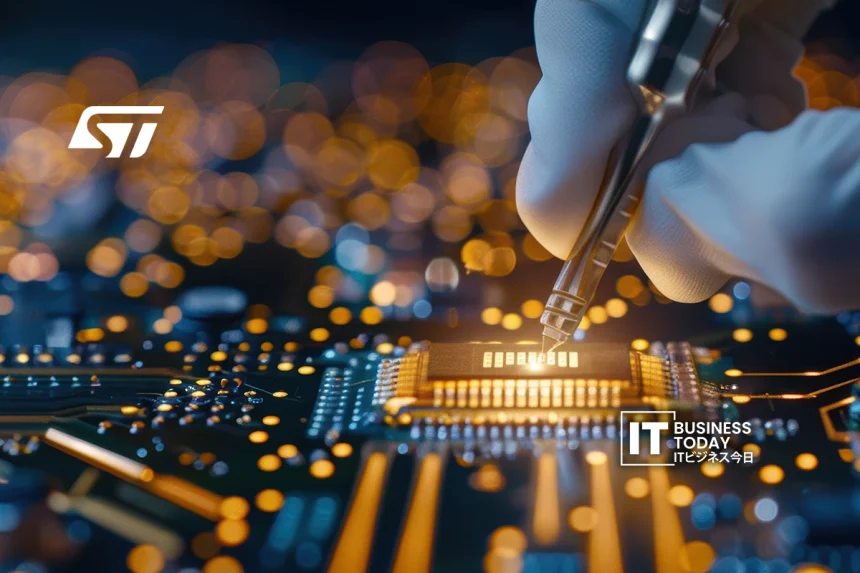
STMicroelectronics has launched its STM32G5 series of mixed-signal microcontrollers. These microcontrollers are designed for real-time power management in AI data centres. They are also used for motor control in robotics and other industrial applications. The new microcontrollers offer processing performance. They also have improved peripherals and hardware-based security features. These features help meet the rising needs of electronic systems.
The STM32G5 family was announced on November 4 2026. It is based on an Arm Cortex-M33 processor that runs at 280MHz. STMicroelectronics says the new series provides double the computing power of the STM32G4 generation. The company has added support for -quantum cryptography. This makes the devices suitable for applications where security and long-term protection of systemsre critical.
In addition, to data centres and robotics the STM32G5 series is meant for photovoltaic installations. It is also used in wind turbines, industrial drives and commercial drones. The release shows how important embedded computing has become. It is used to manage power, control machines and support AI applications.

Real-Time Control Targets AI Data Centre Power Demands
The increasing use of AI accelerators is making data centre infrastructure use power. High-performance GPU clusters need power delivery systems that can handle changing workloads while keeping things stable and working well.
STMicroelectronics says the STM32G5s better high-resolution timer helps equipment manufacturers create accurate control algorithms. These can change power supply units as server workloads change, which helps make things energy efficient and lowers power losses.
The microcontrollers also work with switching frequencies in power supplies that use wide-bandgap semiconductor technologies like silicon carbide (SiC) and gallium nitride (GaN). These materials are becoming more important, for power conversion systems that need to work at higher frequencies.
The importance of such improvements is growing as data centre power density increases. STMicroelectronics notes that GPU cluster development is pushing rack power requirements toward 1 megawatt, while the largest data centres could require more than 2 gigawatts of peak power by 2030.
At this scale, improvements in power conversion and control can help reduce energy losses and associated cooling requirements. The STM32G5 is designed to support the precise control functions needed in these increasingly demanding environments.
Supporting More Sophisticated Robotics and Motor Control
The STM32G5 series also targets robotics applications that require control of multiple motors, rapid responses and accurate movement. These capabilities are particularly relevant to humanoid robots, where compact mechanical components must combine strength, sensing and precision.
The microcontrollers include upgraded motor-control timers and a position encoder to support responsive motor operation. Their processing capabilities are intended to help developers manage axes and integrate additional sensors into robotic systems.
Fine motor control is especially important in hands, where individual fingers may require several motors to perform coordinated movements. STMicroelectronics highlights applications involving hands, for factory automation and medical laboratories, where precise manipulation is essential.
The company is working with robotics developer Ruiyan Intelligent on applications involving robotic hands. The collaboration illustrates how performance embedded controllers can support more complex physical AI systems, in which software intelligence must translate into reliable physical movement.
Built-In Security Includes Post-Quantum Cryptography
Security is another major component of the STM32G5 architecture. The microcontrollers combine Arm TrustZone technology with STMicroelectronics’ STM32Trust security features, including an immutable Root of Trust for secure boot and firmware updates.
The integrated cryptographic engine supports advanced algorithms, including the company’s post-quantum cryptography libraries. Additional capabilities include secure storage for cryptographic keys, software protection, tamper detection and resistance to side-channel attacks.
These features matter a lot for industrial equipment and data centre infrastructure. When firmware gets compromised or credentials are exposed it can seriously hurt system reliability and operational security.
Post-quantum cryptography support is growing in importance. Organizations are getting ready, for risks tied to quantum computing advances. Adding PQC support at the microcontroller level gives developers choices. This helps when building systems that must stay secure for years.
The series also brings a logic array. This lets developers add custom functions directly in hardware. That could mean fewer external logic components are needed, which simplifies the design.
Development Tools and Product Availability
I think STMicroelectronics supports the STM32G5 series using its development ecosystem. The STM32G5 devices work with STM32CubeMX2 the company’s microcontroller configuration and development tool. STM32CubeMX2 offers code previews and updated workflows.
The STM32G5 series also supports STM32Cube HAL2, which gives access to hardware features while saving memory. Development resources include kits and software libraries for digital power and motor‑control applications.
STM32G5 microcontrollers are already being produced. Flash memory options range from 64KB to 512KB and package choices include QFN32 to LQFP128. STMicroelectronics lists a starting price of US$1.034 per unit for orders of 10,000 pieces. STMicroelectronics plans to expand the line, with dual‑core products in 2027.
Implications for Japan’s Semiconductor and Robotics Industries
The launch is relevant to Japan’s semiconductor, industrial automation and robotics sectors. Japanese manufacturers have established capabilities in factory automation, precision machinery, power electronics and robotics, all of which depend on embedded controllers capable of managing real-time operations.
As AI data centre infrastructure expands in Japan, power efficiency is becoming a significant engineering consideration. Microcontrollers that support precise switching and dynamic power supply management could contribute to more efficient power conversion systems used in server infrastructure.
Robotics is a field that looks promising. I think Japanese manufacturers who build robots, service robots and humanoid platforms need reliable motor control, sensor integration and secure embedded computing. Higher‑performance microcontrollers can help these developers manage complex control tasks, inside small systems.
I also see PQC support catching the eye of businesses that plan long‑lived connected equipment and infrastructure. When organizations review their cybersecurity plans hardware‑level security features could become another reason to pick a component.
However the real impact depends on integration costs, product qualification, system‑level performance and how quickly equipment manufacturers adopt the change. A new microcontroller family does not automatically bring gains in data‑centre efficiency or robotics performance.
こちらもお読みください: OKIとフラウンホーファーHHIがレーザー振動計に関する研究内容を明らかにした
Embedded Computing Becomes Central to Physical AI
With the STM32G5 series STMicroelectronics is tackling two linked needs of technology: efficient power management and precise physical control. The mix of processing, better peripherals and built‑in security is meant to give developers more flexibility in data centres, robotics and industrial systems.
As AI moves beyond cloud‑based computing into machines and infrastructure embedded controllers will play an important role, in turning software intelligence into real world operations. The adoption of embedded controllers will depend on embedded controllers delivering performance, energy efficiency and security in demanding environments.


 日本語