 日本語
日本語 





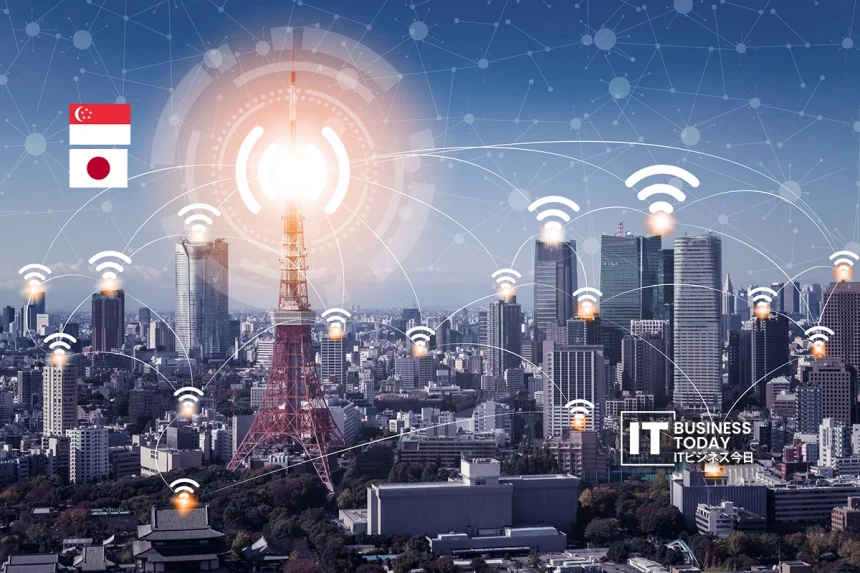
Singapore and Japan have begun to build community in the field of cybersecurity by launching a mutual recognition scheme for labelling schemes of Internet of Things (IoT) cybersecurity. The labelling scheme will facilitate trusted cybersecurity labelling, harmonized standards and interoperability in connected devices exchanges.
The arrangement enables certified IoT devices in one country to be approved in the other, avoiding duplication of testing and certification processes.
The initiative is said to “help vendors speed up access to markets while enhancing the cybersecurity posture of connected devices for consumers and businesses”. The engagement is representative of worsening anxieties related to the security threats of the emerging lot of smart devices like networking-enabled household devices, industrial IoT devices, medical devices, enterprise networking equipment and so on.

Also Read: Fibergate and HOMETACT to Make Rentals Smarter Assets
Why IoT Cybersecurity Has Become a Global Priority
Everyday an explosion of connected devices brings skyrocketing cyber security threats for everyone around the world. The rapidly increasing number of sensors, AI-enabled devices hospitals smart homes and Tesla cars that are connecting our digital infrastructure are only the beginning.
Despite all of these solutions, off-the-shelf and insecure IoT is still susceptible to attack via malware ransomware data theft, and network compromise.
Much more now, governments and regulatory bodies are calling for more stringent security standards that connected devices must meet before leaving the factory.
In response to these challenges, the Singapore-Japan initiative confronts the issue through introducing harmonized standards for cyber security and minimising overlaps among national certification schemes.
How the Mutual Recognition Framework Works
Simplifying Cross-Border Certification
A mutual recognition agreement exists in which any TC-certified IoT product under either Singapore’s Cybersecurity Labelling Scheme and Japan’s Equivalent Security Structure is mutually recognized.
This saves the effort involved in the manufacturers having to work through a series of separate testing and approval procedures for each market.
The structure is designed to lower cost-of-operation to the technology companies and speed up new product launch in Asia-Pacific markets.
Supporting Secure IoT Ecosystems
The setup is also to induce devices designers to implement robust security measures during the design of devices.
Principles of security-by-design like secure software update, password protection, and encryption standards/vulnerability management will be increasingly demanded with the rapid growth of the market worldwide.
Singapore and Japan are trying to harmonize standards so that the digital environment will be more trusted and safer for consumers and businesses.
Impact on Japan’s Technology Industry
Japanese Electronics and IoT Firms Could Benefit
A number of leading electronics, robotics, and industrial automation firms are all based in Japan and are active in the development of IoT technology.
The mutual recognition agreement may result that Japanese companies target to by fly to Southeast Asia more efficiently by decreasing barriers of strict standards and certification.
Firms that are actually developing smart manufacturing systems, connected car applications, health of the art gadgets and artificial intelligence based production machinery could see a significant speed up in reaching regional markets.
Strengthening Japan’s Digital Transformation Goals
Japan has been very insistent on pushing a digital transformation agenda for manufacturing logistics transportation, and public infrastructure.
A solid underlying IoT infrastructure is also becoming critical.
The agreement with Singapore helps also enable Japan to pursue the larger goal of bolstering cybersecurity resilience in tandem with encouraging innovation in advanced technology.
Regional Implications for the Asia-Pacific Tech Sector
A Step Toward International Cybersecurity Standards
Finally, the Singapore-Japan partnership could be an example of wider security coordination in the Asia-Pacific area.
As the number of countries establishing IoT security requirements increases, tech firms are often constrained by a fractured regulatory regime that raises costs and hampers growth.
Mutual recognition regimes could make international registration of new technologies less expensive and easier to implement, spurring worldwide adoption of cybersecurity best practices.
Growing Demand for Cybersecurity Solutions
This agreement will probably also lead to increased demand for cybersecurity services and consulting, trusted chip technologies, and IoT security software.
Entreprises in these fields (cloud computing semiconductors AI infrastructure, enterprise networking) could see an increase in the longing of secure connected-devices ecosystems.
Cybersecurity companies focusing on vulnerability testing, detection of intrusions and embedded security mechanisms may find commercial opportunities emerging due to increased focus on regulatory compliance.
Business Impact Across the Technology Industry
Faster Market Access for Device Manufacturers
For companies that are more directly involved in the design of the IOT-enabled products, the decrease in the need for duplicate certification would be expected to Really decrease the required time-to-market Because of this, it holds particular significance for start up and mid-sized technological firms trying to expand more rapidly through international markets.
Decreased compliance complexity could also promote greater innovation within all smart devices, industrial automation and connected infrastructure technologies.
Increased Pressure to Meet Security Standards
Concurrently Still, the initiative could create additional strain on weaker manufacturers.
Companies who can’t continuously adapt to new levels of security may find it difficult to penetrate regulated markets or win large enterprise customers wary of cyber risks This could result in more resources being committed to secure hardware development, firmware protection, and regular cybersecurity servicing during the life of the product.
The Future of IoT Cybersecurity in Asia
The Singapore-Japan partnership foreshadows a move toward greater governance of cybersecurity through the digital economy.
Governments are expected to implement more strict security standards and agreements on international cooperation, as IoT is further embraced by various industries such as manufacturing healthcare transportation, energy, and cities.
Not only would it cooperate with one of the world’s most technologically advanced nations, this would also serve to strengthen Japan’s reputation in the emerging area of safe digital infrastructure.
Within the technology industry altogether, the treaty demonstrates how cybersecurity is becoming an ‘essential ingredient to innovation, international reach, and long-term digital trust.


 English