 日本語






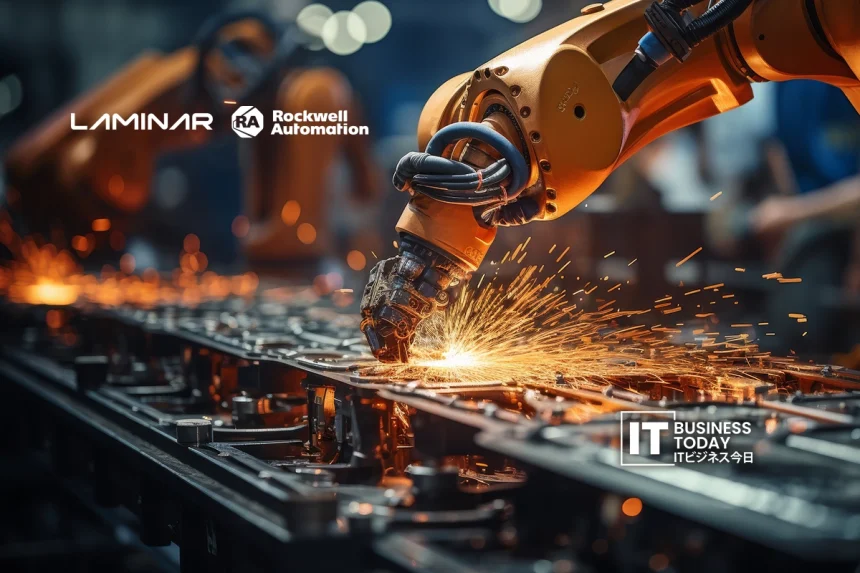
Industrial manufacturers are turning more and more to intelligence real‑time monitoring and advanced automation to make production faster and to lessen the impact on the planet.
Laminar has joined the PartnerNetwork of Rockwell Automation as a Technology Partner. This gives manufacturers new ways to combine real‑time fluid intelligence, with industrial automation systems.
On November 12 2026 the partnership was announced. It will concentrate on improving Clean‑in‑Place (CIP) operations and product changeover processes. The goal is to help industrial manufacturers recover production time cut wasteful resource use and boost performance. This could also affect Japan’s manufacturing industry, the food processing, pharmaceutical, chemical and industrial production sectors.

Laminar Brings Real-Time Fluid Intelligence to Rockwell Automation
Laminar specializes in Process-Aware Autonomy. This technology approach combines patented inline sensors with machine learning models to identify fluid conditions and process transitions in real time.
By integrating with Rockwell Automations technologies Laminar aims to help manufacturers make more informed operational decisions. These decisions are based on actual process conditions of relying entirely on predefined recipes and fixed timers.
One of the applications is Clean-in-Place. This process cleans production equipment, pipes, tanks and other manufacturing components without dismantling the machinery.
CIP operations are especially important, in industries where hygiene and product quality’re essential. These industries include food and beverage production, pharmaceuticals and biotechnology.
Traditional cleaning processes often run according to predetermined schedules. However cleaning requirements can vary depending on the production environment and the condition of the equipment.
By monitoring fluid conditions Laminars technology can help determine when cleaning processes have reached validated requirements. This allows manufacturers to avoid extended cleaning cycles while still maintaining appropriate quality and safety standards.
The collaboration will also explore how process-state information and operational data can support manufacturing improvements. These improvements will come through visualization tools, analytics and higher-level manufacturing systems.
Why Smart Manufacturing Matters for Japan
Japan owns one of the advanced manufacturing ecosystems on the planet. Japan is strong in production, electronics, chemicals, food processing and industrial machinery.
However manufacturers face growing pressure to boost productivity, cut costs solve workforce shortages and lower environmental impact.
These challenges push businesses to invest in manufacturing technologies. Smart manufacturing connects equipment, production data and automated decision‑making systems.
Japan’s Ministry of Economy, Trade and Industry (METI) promotes transformation with its Smart Manufacturing Development Guidelines. METI worked with the New Energy and Industrial Technology Development Organization (NEDO) to create those guidelines.
The guidelines highlight using solutions to boost productivity and streamline manufacturing operations throughout all business processes. The guidelines avoid focusing on isolated production activities.
Laminar’s partnership with Rockwell Automation reflects this direction. By merging real‑time process intelligence, with industrial control systems manufacturers gain visibility into production activities and spot chances to improve efficiency.
Opportunities for Japan’s Food, Pharmaceutical, and Chemical Industries
The collaboration could be especially important for manufacturers who work in industries that require regular equipment cleaning and frequent product changes.
Food and beverage manufacturing: Japanese food companies could gain from cleaning processes along production lines in storage tanks and on processing equipment. Shortening the time spent on cleaning could increase production time. Help control the use of water and chemicals.
Pharmaceutical manufacturing: Pharmaceutical plants follow strict rules about cleanliness and quality. Real-time monitoring of processes could help make cleaning choices as long as all the required checks and rules are followed.
Chemical manufacturing: Chemical companies could use process intelligence to make use of their equipment track changes in fluids and cut down on unnecessary stops in work.
Biotechnology and processing: Companies that deal with complicated fluid-based production could get better results from improved monitoring and more flexible automation systems.
These examples show how specific AI techniques can solve problems, in manufacturing instead of just adding more software layers.
Business Impact: Productivity and Sustainability Together
I see that this partnership gives manufacturing businesses a chance to boost efficiency and also help sustainability goals.
Cleaning takes a lot of water, chemicals, energy and time. If cleaning cycles go on long manufacturing businesses lose production time and spend more money.
AI supported process monitoring can help manufacturing businesses find ways to cut cleaning time that has already been checked and cut down on resources used.
Japanese manufacturers who see costs rise and ask for environmental care can use these improvements to stay stronger in the future.
This technology can also offer chances, for automation providers, system integrators, sensor makers and software developers.
Companies that can link physical manufacturing equipment to real-time data and smart controls may gain an edge as smart factory use grows.
Challenges and Considerations for Japanese Manufacturers
Despite its promise using AI in manufacturing needs preparation.
Companies need to make sure that the data from sensors is correct that the machine learning models work properly and that the choices made by machines follow the rules for production and safety.
In places that make food and medicine checking that cleaning is done right is very important. Making cleaning should never affect how clean things are or the quality of the products or following the rules.
Connecting these systems with the old ones used in factories is another thing to think about. Companies might have to look at if the machines work how to keep data safe how to teach workers and if its worth the money before trying to use them more widely.
For companies, in Japan the cost to put these systems in and finding people who know how to use them might also affect how many of them decide to use AI.
The Future of AI-Driven Sustainable Manufacturing in Japan
Laminars entry into Rockwell Automations PartnerNetwork is another step toward bringing artificial intelligence, industrial sensors and automation in real manufacturing settings.
This partnership shows how real-time process intelligence can help manufacturers make choices about cleaning tasks, scheduling production and using resources.
Also Read: NVIDIA Expands Production Capacity to Accelerate AI Infrastructure
In Japan, where manufacturing efficiency and environmental performance’re key business goals these kinds of technologies could open up new possibilities in many different industries.
As manufacturers keep putting money into factories and intelligent automation solutions that offer clear improvements in production levels, resource use and how well things work are expected to get more focus.
In the end the future of manufacturing will rely on how well companies mix new technology with the needs of actual production. Partnerships like the one between Laminar and Rockwell Automation could help speed up the move, toward efficient and eco-friendly factory operations.



 English