 日本語
日本語 





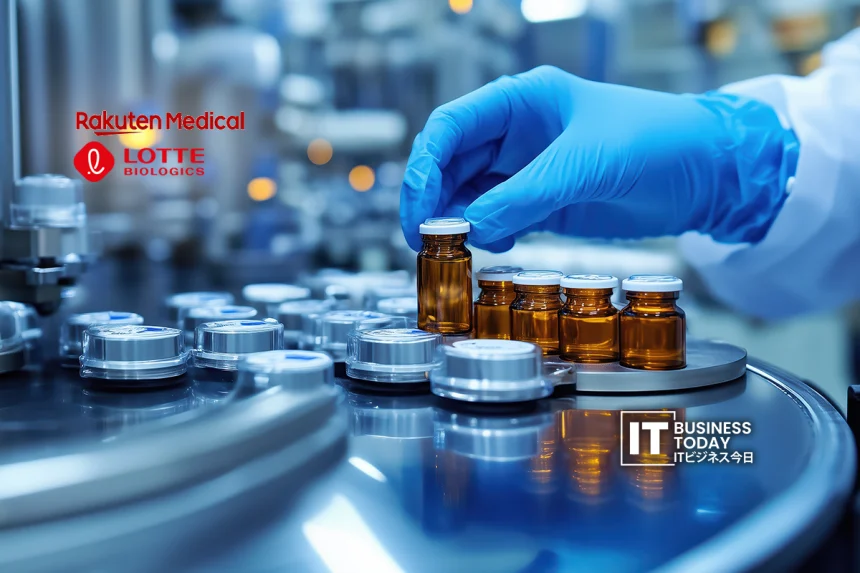
Rakuten Medical, Inc., a biotech firm in the U.S., has partnered with LOTTE Biologics from South Korea. They signed a contract for biopharmaceutical manufacturing. This agreement will help boost Rakuten Medical’s growing global oncology portfolio. Rakuten Medical announced a deal at the J.P. Morgan Healthcare Conference in San Francisco. This deal will boost its production of innovative cancer therapies. This includes the Alluminox® photoimmunotherapy platform. It is crucial for clinical and future commercial stages.
Under the agreement, LOTTE Biologics will provide advanced manufacturing services for critical components such as monoclonal antibody intermediates and their conjugates, integral to the development and eventual commercialization of Rakuten Medical’s targeted oncology treatments. These services will be delivered through LOTTE’s specialized antibody‑drug conjugate (ADC) manufacturing facility at the Syracuse Bio Campus in New York.
Strengthening Global Biopharmaceutical Supply Chains
The partnership tackles a major challenge in biopharma development. It focuses on scaling lab discoveries into reliable production systems. These systems must also meet global regulatory standards. Rakuten Medical’s Alluminox technology uses photoimmunotherapy. This method combines cell-targeting antibodies with light-activated agents. Together, they selectively destroy solid tumor cells. The technology is gaining traction in global clinical trials. It is already approved in Japan for recurrent head and neck cancer and is expanding into broader indications with Phase III trials across the U.S., Taiwan, Japan, and soon in Ukraine and Poland.

Also Read: Kura and Kyowa Report Strong KOMZIFTI AML Data
LOTTE Biologics will support Rakuten’s expanding clinical and commercial requirements by supplying high‑quality bioconjugates that comply with stringent regulatory expectations across these diverse markets. This scalable manufacturing support will be instrumental for Rakuten Medical as it continues to pursue broader indications and plans Phase I trials in Japan for additional solid tumors later this year.
What the Agreement Means for Japan’s Biotech Landscape
For Japan’s biopharmaceutical and tech ecosystem, the deal has several strategic implications:
- Boost to Domestic Oncology Innovation:
Rakuten Medical’s Alluminox platform is based on advanced research. It is currently in clinical trials around the globe. Japan’s approval and expansion show trust in local biotech innovations. This could boost investment and partnerships in the country’s cancer research community.
- Enhancing Japan’s Role in Global Biopharma Supply Chains:
While LOTTE Biologics is based in South Korea and its Syracuse facility is in the U.S., the inclusion of global clinical and commercial support — including Japan — in this agreement highlights how Asian biotech innovations are increasingly integrated into international manufacturing and regulatory networks. The alliance enhances Japan’s visibility and participation in global biopharmaceutical development and supply strategies.
- Accelerating Adoption of Precision Therapies:
Japan has an aging population and a high rate of solid tumors. This creates a strong need for targeted cancer therapies. This makes progress in this area very important. Agreements like this help move promising treatments from trials to market. This speeds up patient access to new therapies. It also positions Japanese and Asia-Pacific companies as leaders in global oncology innovation.
Broader Impacts on Biopharmaceutical Businesses
The Rakuten‑LOTTE agreement reflects several broader trends shaping the biopharma industry:
Globalization of Contract Manufacturing:
Biotech companies are using contract development and manufacturing organizations. This helps them speed up production. LOTTE Biologics leads in antibodies and conjugation services. This success comes from its investment in facilities, such as the U.S. ADC campus. Having manufacturing infrastructure in various regions is key. It helps meet global demand and comply with regulations.
Acceleration of Oncology Therapy Production:
Cancer therapies are becoming more complex. Biologics are now paired with precision delivery systems. This means supply lines need to be scalable and compliant. The Rakuten-LOTTE deal guarantees a steady supply of bioconjugate parts. This supports clinical trials and helps with commercialization. This can help get life-saving treatments to market faster.
Competitive CDMO Landscape:
LOTTE Biologics is stepping up. This shows that CDMOs are now strategic partners, not just service providers. With advanced facilities, CDMOs are helping innovations become commercial-ready. This is shifting the biopharma manufacturing world. Companies must create flexible, high-quality, and globally compliant facilities.
Japan’s Strategic Positioning in a Rapidly Evolving Market
Japan’s biotech and healthcare fields are growing quickly. This growth comes from strong research and skilled clinical work. Rakuten Medical and LOTTE Biologics show how global partnerships can boost local technologies. These alliances blend Japanese clinical skill with global manufacturing power. This helps Japanese biotech companies speed up
Global demand for advanced cancer treatments is rising. This is due to more cases and new technology. Japan’s role in this area is set to grow. Partnering with international CDMOs helps companies join global clinical networks. This move positions them to influence treatment standards and strengthen supply chains. In turn, it drives growth and boosts their industry impact.
Looking Ahead
Rakuten Medical will speed up its global clinical development. This is possible because of a new manufacturing deal with LOTTE Biologics. They provide reliable production support. This deal boosts Japan’s role in precision oncology. It also highlights the benefits of international partnerships in biopharmaceutical manufacturing.
Biotech innovation and global teamwork are advancing healthcare. Strong manufacturing capacity is key to this progress. Partnerships like this are key to the future of global healthcare. They help, from early research to making treatments available for patients.



 English