 日本語
日本語 





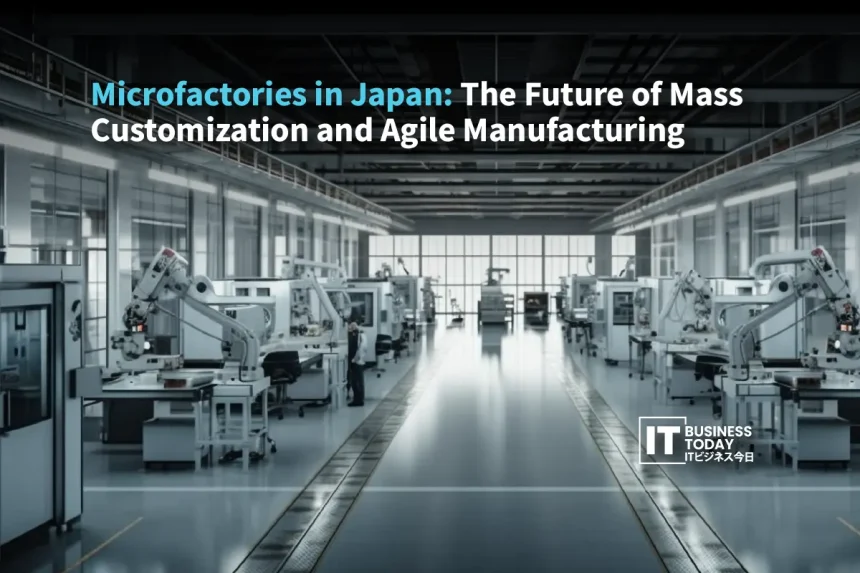
Japan once taught the world how to build big. Long assembly lines. Massive factories. The Toyota Production System became a global blueprint. Bigger floors meant faster output. Efficiency came from scale. That model shaped modern manufacturing. And now comes the twist. Japan is walking away from size. The same country that mastered scale is choosing small.
Across Japan, factories are shrinking. Not in ambition. In footprint. Microfactories are taking shape. These are compact, highly automated facilities designed for high mix, low volume production. They do not chase millions of identical units. They handle variety. Different models. Small batches. Custom orders. Speed matters more than volume here.
This shift is not about cutting costs. It is about staying alive. Labor is scarce. Supply chains break easily. Demand changes fast. Microfactories answer all three. They combine traditional craftsmanship with digital twins, software, and smart machines. What looks smaller from the outside is actually more capable inside. Japan is not giving up manufacturing power. It is compressing it into something sharper and faster.

When Monozukuri Meets the Cloud
Monozukuri is the craft of making objects. In Japan, it has never been just a job matter. It is all about the love, the meticulousness, and the feeling of being the creator of something great. For decades, it was about manual perfection. Every part, every joint, every finish mattered. But now things are changing. Technology is becoming part of the craft. Digital tools, sensors, and software are entering the factories. What used to be all hands and skill is now hands plus machines. Some call it digital craftsmanship. It is where human skill meets smart technology.
The way factories think about work is also changing. For a long time, bigger was better. Big assembly lines, big warehouses, big factories. That was economies of scale. If you made a lot, you made money. But today, making a lot is not enough. What matters more is versatility. Economies of scope are taking over. Factories need to switch products quickly. They need to make small batches. They need to customize. Being flexible is now more valuable than just being big.
Small and medium factories, the machi-koba in Ota City, show this perfectly. These small workshops could make many different products without wasting time. They were like tiny microfactories. Today, many of them are going digital. They use sensors, AI, and connected tools to work faster and smarter. But adoption is slow. Approximately 35.2 percent of manufacturers in Japan have adopted smart factory technologies that include DX, IoT, and AI. This indicates the size of the opportunity and at the same time the gap between those who have adopted and those who are still trailing.
Monozukuri today is not old or new. It is both. Skill and technology are together. Factories are not just making things. They are learning, adapting, and ready for anything.
Also Read: Fleet Intelligence in Japan: How Connected Vehicles Are Transforming into Software-First Platforms
Why This Shift Can’t Wait
Japan is running into a wall and you can feel it everywhere. Factories have fewer workers. The massive assembly lines that made the country’s reputation cannot run themselves. It is dubbed the 2024 Problem. It is a simple yet a dreadful situation at the same time. The demographic is getting older rapidly. By 2040, the proportion of senior citizens in Japan will be nearly 35 percent. This will result in a decreased number of younger workers available for hiring, hence, a reduced number of laborers for lifting, checking, assembling, etc. Every line, every shift, every plan has to deal with that reality. It is not theory. It is happening now.
The pandemic made the problem worse. Supply chains are brittle. One delay somewhere and the whole system slows down. Parts stuck in a port. Shipping costs spiking. Orders waiting. Factories cannot plan months ahead the way they used to. That is why small factories make sense. Microfactories. Flexible, near the cities where the products are sold. Close to the people who need them. They can make changes fast. They can switch models. They can fill a sudden demand. They can keep production going even when the world outside is unpredictable.
And yet the economy goes on. Japan’s industrial output grew by one and a half percent on an annualized basis in October 2025. Not huge. But it shows factories are still producing. And it shows something else. Flexibility matters more than size now. Microfactories, agile production, small batches, custom orders. That is where the future is. Japan cannot depend on giant factories alone anymore. The next wave of manufacturing has to be local, adaptable, and ready for anything that comes next.
Anatomy of a Japanese Microfactory
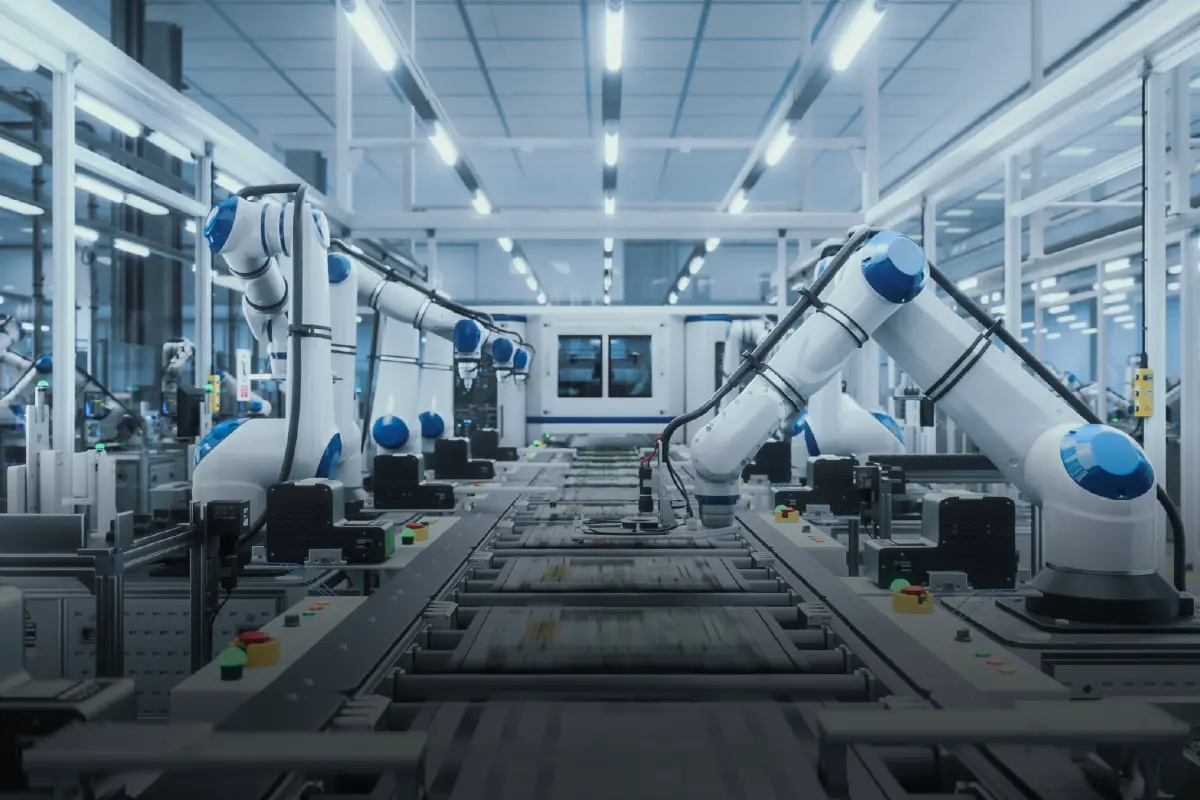
Japanese microfactories do not look like the huge factories you imagine. They are smaller, tighter, more flexible. Modular cells are utilized rather than long conveyor belts that cover the entire halls. They are movable workstations that can be swapped or reconfigured in hours. For example, on one day a cell would produce a car part and on the next day it can produce a sensor. The idea is simple. Flexibility beats size. It lets factories handle different products quickly without wasting time or space.
3D printing plays a big role here too. Factories no longer need huge inventories sitting around. They can print parts on demand. That reduces waste, lowers cost, and lets them respond fast when orders change. It is not futuristic. It is happening now in Japan. Small batches, high mix, low volume, everything becomes possible.
Take Honda for example. In June 2025, they produced around 60,804 vehicles in Japan, up 8.5 percent from last year. That number is more than just production. It shows a shift. Honda is moving toward flexible production platforms, digital technologies, and smaller specialized lines. They can produce different models on a single line without losing efficiency. The Yorii plant and other facilities are proof that microfactory principles can scale to large automakers.
Sony shows another side of this story. They reorganized their domestic manufacturing sites for cameras and devices. Humans work alongside robotics and AI platforms to make complex gadgets. The result is super-high mix production with near-zero waste. Coordination improves. Efficiency goes up. And they can adapt quickly to changing demand or new products.
Japanese microfactories are not just a trend. Human expertise, advanced technology, and design thinking are the forces behind the modular cells, 3D printing, robotics, and AI. Manufacturing has become a speedy, versatile, and anything-ready environment through their collaboration. Factories are dynamic, agile, and demonstrating that being small can still equate to being powerful.
Sustainability That Pays for Itself
Microfactories are smaller by design. That alone changes everything. Smaller space means less lighting. Less air conditioning. Less power running all day and night. You do not need to cool massive halls or light up endless floors. Energy use drops naturally. Not because someone forced it. Because the footprint is smaller.
Then comes location. These factories sit closer to where products are sold. Sometimes inside cities. Sometimes right near demand centers. That cuts logistics in a big way. Fewer trucks. Shorter routes. Less fuel burned. Making goods where people actually buy them sounds obvious now. Earlier, it was ignored. Microfactories bring it back.
Production on demand is another shift. Traditional factories make too much. Forecasts go wrong. Warehouses fill up. Unsold goods turn into waste. Microfactories flip this model. They produce only when there is demand. Smaller batches. Faster turnaround. Almost no excess inventory. Waste drops without trying too hard.
This is where sustainability becomes a KPI, not a marketing slide. Energy use goes down. Waste reduces. Transport emissions fall. All because the system itself is designed differently. No grand promises. Just smarter execution.
Microfactories do not chase green goals directly. They achieve them as a side effect of being agile and local. That is what makes this model powerful. Sustainability here is not optional. It is built in.
The Era of Mass Customization

Consumers have changed. In Japan, people no longer want the same product as everyone else. They want choice. Small changes. Personal touches. A car that feels like theirs. Electronics that match how they live. This demand keeps growing. Mass production struggles here. It is built for sameness. Microfactories are built for difference.
Batch size one sounds expensive on paper. In reality, it is becoming normal. When factories are flexible, small batches do not slow things down. Modular cells switch fast. Software handles variation. Production adapts without chaos. Custom no longer means slow or costly. It just means different.
The bigger shift is how factories are connected. Instead of one giant factory serving the world, imagine many small ones. Each close to the customer. Each linked through the cloud. Designs, updates, and data move instantly. Production stays local. If demand spikes in one city, that factory responds. If another slows down, others carry the load.
This network approach changes risk too. One failure does not stop everything. The system keeps running. That is resilience built into the structure.
Mass customization is not a future promise. It is already starting. Microfactories make it practical. They turn personalization into a standard feature. Not a premium add-on. Manufacturing becomes closer, smarter, and more human again.
A New Industrial Revolution
Microfactories are not a side project. They are Agile made physical. Short cycles. Fast feedback. Small teams. Constant adjustment. What software teams learned years ago is now showing up on the factory floor. Build. Test. Change. Repeat. That is how manufacturing survives uncertainty.
Japan is not losing its industrial strength. It is reshaping it. The giant factories of the past were built for stability and scale. Today’s world does not offer either. So Japan is condensing its capability. Packing intelligence, flexibility, and skill into smaller spaces. The giants of the 20th century are not disappearing. They are learning to move faster. Like ninjas, not sumo wrestlers.
For leaders, this is the moment to pause and look inward. Audit your footprint. Look at what truly creates value and what only adds weight. Bigger is not always better anymore. Sometimes, unscaling brings better returns than scaling ever did. The future factory is not massive. It is smart, local, and ready to change.



 English