 日本語
日本語 





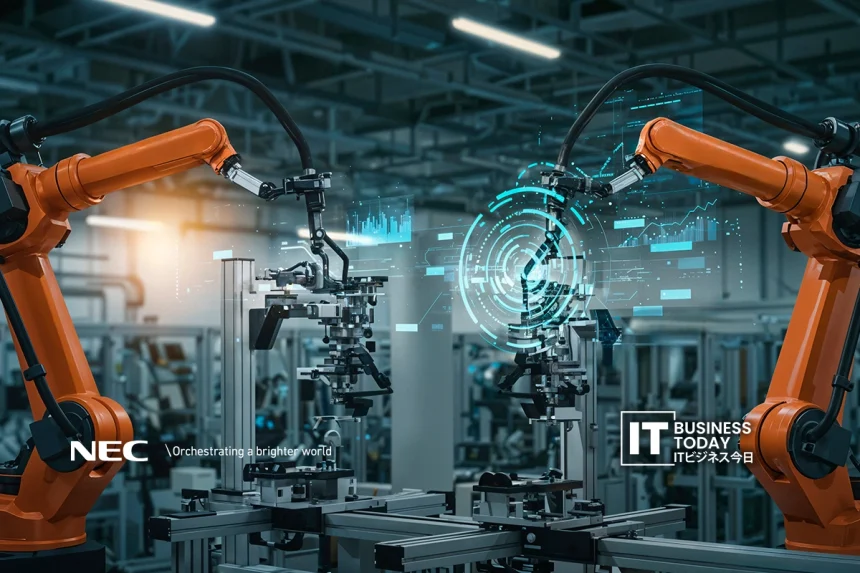
NEC Corporation announced that it will launch a new “AI Agent Service for Procurement Negotiations” in Japan utilizing its proprietary “Automated Negotiation AI.” The solution will help automate complex procurement processes such as adjusting delivery dates and quantities with suppliers-a process often cumbersome and time‑consuming in manufacturing and supply‑chain environments.
The service will go commercial this December and represents an important milestone in the journey of industrial digital transformation and AI-powered supply-chain automation, especially for Japanese manufacturers facing frequent demand swings and multilayered supply networks.
What the New Service Does
NEC’s Automated Negotiation AI independently creates optimal transaction proposals and negotiates the terms of a deal with suppliers without human intervention. The key capabilities include:

Analyzing order data automatically to determine which parts or materials need to be delivered or for which adjustment in quantity is required.
Creating negotiation proposals and interfacing with supplier systems (or user interfaces) to conclude agreements.
Also Read: HPE Joins Partners to Create Quantum Scaling Alliance
Completing negotiations in seconds — NEC claims that, in a 2024 PoC, agreements were concluded in about 80 seconds, while this is usually done in hours or days if handled manually.
This is indicated by a high “automated agreement rate,” where about 95% of negotiations in the test were completed all by AI, without human intervention.
With the introduction of this automation, NEC aims to allow companies to respond swiftly to changes in demand, optimize their inventories, lessen supply-chain bottlenecks, and consequently reduce costs.
Why This Matters – Especially for Japanese Manufacturing and Supply-Chain Industries
Addressing Complexity in Modern Supply Chains
Global supply chains are more complex and fragile now. Demand is changing fast, and supply disruptions are on the rise. In Japan, many manufacturers use just-in-time inventory models. So, timely procurement coordination is crucial for them.
NEC’s AI Agent Service handles tasks automatically. It adjusts inventory, places reorders, and manages scheduling. This helps manage complexity at scale. So, human staff can focus on strategic planning, quality control, and building strong supplier relationships.
Reducing the Risk of Stockouts and Overstock
By streamlining procurement negotiations and enabling fast adjustments, companies avoid under- or over‑stock situations. This helps companies avoid lost sales because of stockouts while mitigating the financial drain of excess inventory.
This is very important for companies that make many different products in small amounts. These are common in Japan’s electronics, car parts, and specialized manufacturing.
Enhancing Efficiency: Time, Labor, and Cost Savings
Two-minute negotiations cut down on hours or days of talks. This means lower administrative costs. Large manufacturers that manage thousands of parts or orders can save a lot on labor. This also helps them speed up their throughput.
Automating these negotiations ensures transparency and consistency. One logic guides every transaction. This method cuts down on human error, reduces oversight differences, and speeds up processes.
Digital Transformation & AI Adoption for SMEs and Mid‑Size Companies
Small companies find it hard to handle supply-chain changes because they lack staff and use old systems. Large manufacturers have solid procurement and ERP systems.
NEC’s AI-driven procurement automation supports mid-sized firms and SMEs in Japan. It improves supply chains and drives digital change in the sector.
Wider implications for the technology industry and business ecosystem in Japan
Growth in Supply‑Chain Tech & SaaS Market
This increasing demand for AI-driven procurement and supply‑chain optimization will create new opportunities for software providers, system integrators, and cloud‑based tools. The entry of NEC into the market would encourage other technology companies to develop or enhance AI-based procurement, logistic, or supply‑chain platforms as well.
Integration with ERP, Manufacturing, and IoT Systems
Automated negotiation AI works well when it has accurate, real-time data. This covers inventories, demand forecasts, supplier catalogs, and delivery schedules. This will increase the demand for better integration of procurement AI, ERP systems, IoT-enabled manufacturing lines, and supply chain management platforms.
Growth may happen in areas like data integration services, API development, core system modernization, and digital procurement infrastructures.
Supplier & Partner Ecosystem Transformation
Suppliers and smaller parts manufacturers need to upgrade their systems. This will allow AI agents to manage orders and confirmations directly. This change will likely speed up modernization in the supply chain. It will make the system more responsive and efficient.
Building Resilience in Global Supply Chains
Once automated procurement is set up in Japan, manufacturers can rely less on just-in-time imports. This change will help them manage inventories more effectively. It will also let them respond quickly to disruptions. This might help boost Japan’s manufacturing base. A strong base is key in today’s global economy.
Challenges & What Companies Should Be Aware Of
Data Accuracy and Integration: For reliable AI negotiation, companies need accurate and timely data. This includes demand forecasts, stock levels, and supplier information. This may mean upgrading old systems.
Supplier Readiness: Some suppliers can’t handle automated ordering or accept AI-generated proposals. The network of suppliers must also evolve in their capability to interact with the automated agents.
Trust and Governance: Organizations must clearly outline when AI can act on its own and when humans need to step in. This includes high-risk areas, compliance tasks, and strategic sourcing.
Change Management: Shifting from manual negotiations to AI systems requires cultural change, staff training, and acceptance of AI workflows.
Strategic Significance for Japan’s Industrial Future
The roll-out of NEC’s automated negotiation AI is more than just another SaaS product; this is about a change in paradigm in how procurement and supply‑chain processes can be managed in an increasingly fastpaced, unpredictable global market.
For Japanese manufacturing, long reliant on human orchestration, detailed planning, and lean processes, this may be the start of a new era-one in which supply‑chain agility, data-driven decision‑making, and real-time response will be routine.
In other words, NEC‘s AI agent service could form the basis of the next wave of manufacturing and supply‑chain innovation in Japan: something where AI optimizes not just efficiency but changes how business is done.

 English