 日本語
日本語 





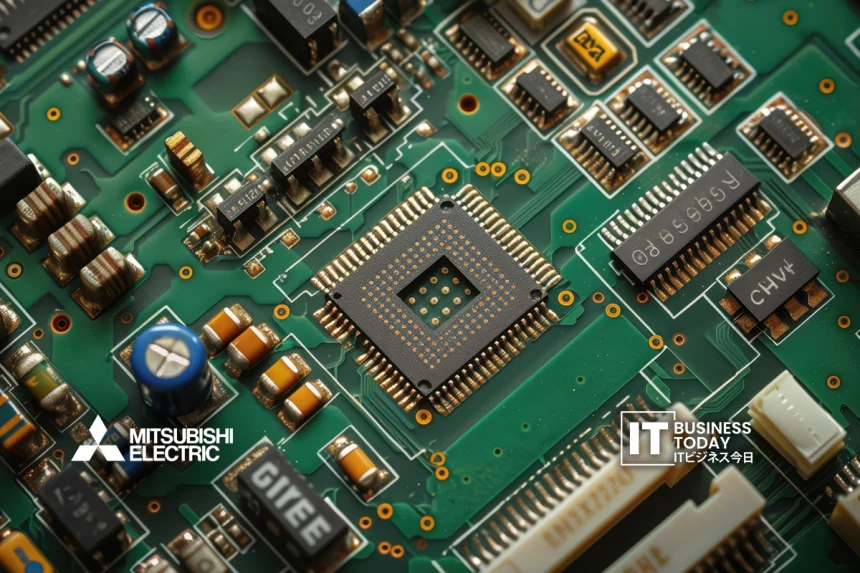
Mitsubishi Electric has announced the launch of two new high‑voltage insulated‑gate bipolar transistor (HVIGBT) modules in its “XB Series” that feature higher insulation voltage and improved reliability for industrial equipment and rail‑car inverter systems.
These new modules-one standard-isolation (6.0 kVrms) and one high-isolation (10.2 kVrms)-complement the 4.5 kV rating of the XB Series to position them for use in demanding environments that require both high capacity and robust insulation.
What’s New: Technical Advances in HVIGBT Design
The new XB‑Series modules feature Mitsubishi’s unique relaxed-field-of-cathode (RFC) diode and carrier-stored trench-gate bipolar transistor (CSTBT) structures, facilitating compact chip termination (downsizing by approximately 30%) while increasing moisture resistance to about 20× compared to former models.

Also Read: Micron’s $9.6B Investment to Boost Japan’s Chip Industry
Switching loss is reduced by approximately 5–15% compared to earlier modules, which improves inverter efficiency.
RRSOA tolerance – important for reliability under high-stress and switching conditions – is increased by up to 2.5×.
Combining a high voltage rating of up to 4.5 kV, robust insulation, and high current capacity, these modules are tailored for large inverters used in railcars, industrial plants, renewable-energy infrastructure, and other heavy-duty electric systems.
Mitsubishi Electric intends to officially release the modules on December 9, 2025, with the displays planned for major trade shows, including the 40th Nepcon Japan R&D & Manufacturing Show (Tokyo, January 21–23, 2026), and other exhibitions worldwide.
Significance for Japan’s Tech & Industrial Landscape
Strengthening the domestic power‑semiconductor ecosystem
Japan is boosting its semiconductor industry. It focuses on power electronics. These are key for industrial automation, rail systems, renewable energy, and electric vehicles. Mitsubishi’s HVIGBT modules are a game changer. They provide reliable, advanced components. These modules meet the global need for high-performance power systems.
With the offer of high‑isolation and moisture‑resistant modules, Mitsubishi Electric enables stable inverter operation even under harsh conditions, outdoors or on rail systems and industrial sites. This may fuel fresh demand for Japanese‑manufactured power semiconductors and related components, strengthening the domestic supply chain.
Enable cleaner energy and electrified industrial systems.
Inverter-driven systems perform better. They reduce switching losses. Reliability boosts the use of these technologies in rail electrification, factory automation, and renewable energy. This means using less power. It boosts performance and quickens our journey to carbon neutrality and sustainability.
Japan can use this new power-semiconductor tech to create a greener infrastructure. It will help promote electric transport and support sustainable industrial systems.
Opening opportunities for downstream businesses and system integrators
Advanced HVIGBT modules help equipment makers, motor drive suppliers, EV inverter producers, and renewable energy inverter manufacturers enhance their products. This upgrade lets them manage higher voltage and current. It also increases reliability.
System integrators, design houses, motor manufacturers, and firms in storage, energy conversion, and large-scale automation will gain from this growth. This is especially true for those focused on strict reliability and safety standards.
Driving innovation and competition in global markets
Mitsubishi Electric has released world-class HVIGBT modules. This move boosts Japan’s role in the global power-semiconductor market. This could push overseas competitors to boost their performance. As a result, we might see more innovations, better pricing, or added features for customers.
Challenges and What to Watch
Adoption cycles: Systems with HVIGBT modules, such as rail inverters and industrial drives, usually have long certification and testing times. So, widespread adoption will take time.
Competition from alternative technologies: New semiconductor technologies, such as silicon carbide (SiC) and gallium nitride (GaN), are becoming popular. HVIGBT might still be effective in some areas, but tech changes may challenge traditional IGBT systems.
Supply Chain and Material Demand: Increased production will automatically raise the demand for specialized materials, testing, and thermal-management components. Firms within this supply chain should, therefore, be prepared to scale up production.
Global economic conditions and volatility of demand: Usually, industrial investments are linked with broader macroeconomic cycles. Demand for large-scale inverter systems may fluctuate, hence affecting uptake.
Looking Ahead: What This Means for 2026 and Beyond
Mitsubishi Electric‘s new high-isolation HVIGBT modules will impact Japan’s electrification plans. This covers fields like industrial automation, rail transport, clean energy, and heavy machinery. As companies start integrating these modules into next-generation inverters, we might see:
new-generation electric railcars and mass‑transport systems with high-efficiency power electronics
Industrial automation and heavy equipment electrification are booming. This surge comes from dependable high-voltage switching.
Renewable energy systems and energy-storage inverters are common today. The focus is on achieving peak performance and a long lifespan. Japanese component suppliers, system integrators, and semiconductor firms are thriving. This is happening because the domestic tech ecosystem is getting stronger.
This is a crucial time for Japan’s power semiconductor industry. It will significantly impact transportation, energy, manufacturing, and the environment.


 English